

HiltonC
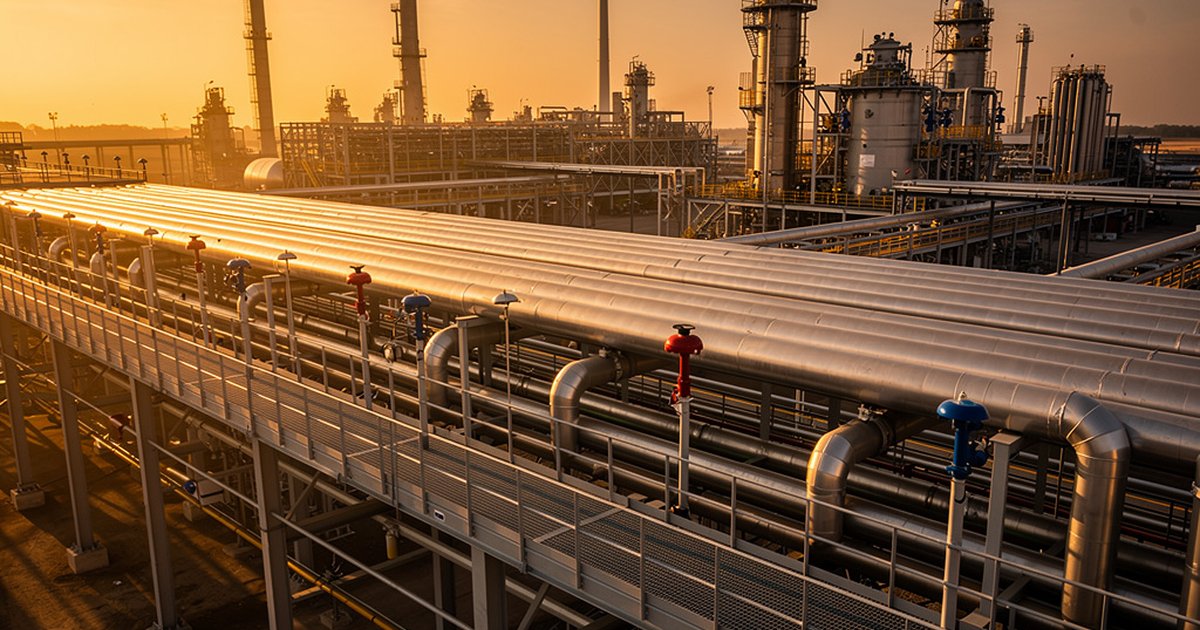
Pipe racks are the circulatory system of every process plant. They carry hydrocarbons, steam, cooling water, instrument air, and electrical power from one unit to another — often spanning hundreds of meters, running directly through the heart of the facility. Yet when fire protection engineers walk a site, pipe racks are consistently among the least-protected structures they encounter. The assumption, usually unstated, is that the process units themselves are the risk. The pipe rack is just infrastructure.
That assumption is wrong — and expensive when tested.
A fire that originates at or beneath a pipe rack doesn’t stay local. It travels. Flanges fail, cable trays burn through, instrument lines rupture. What begins as a contained leak ignition can escalate into a cascading multi-unit event within minutes. Engineering the pipe rack for fire protection isn’t optional on a well-run facility. It’s a discipline of its own — one that demands the same rigor applied to tank farms and process vessels.
Why Pipe Racks Are a Distinct Fire Hazard
The risk profile of a pipe rack differs from that of a process vessel or storage tank in several important ways. First, pipe racks concentrate multiple hazards in a linear structure: flammable hydrocarbons, electrical cable trays, instrument signal cables, and high-pressure steam lines often share the same rack tiers. A fire on one tier creates thermal and physical exposure to everything above and beside it.
Second, pipe racks are inherently open structures. There are no walls, no compartments, and no natural barriers to slow fire spread. Wind — especially in open Saudi industrial sites where ambient conditions are hot and seasonal shamal winds are strong — can accelerate flame spread and distort water spray patterns, reducing the effectiveness of suppression systems that were designed under still-air assumptions.
Third, structural failure is a credible outcome. The steel structural members supporting a pipe rack are typically designed to carry load, not to resist fire. Without fireproofing, unprotected steel can lose a significant portion of its load-bearing capacity within minutes of sustained hydrocarbon fire exposure. When the structure fails, it doesn’t just drop the pipes it supports — it can pull adjacent structures and connected pipework down with it.
The combination of these factors means that a pipe rack fire, if uncontrolled, can disable multiple process units simultaneously. That’s not a localized incident. That’s a facility-level emergency.
Structural Fireproofing: Passive Protection First
The starting point for pipe rack fire protection is passive — and it’s non-negotiable. The primary steel structure of a pipe rack, including columns, beams, and bracing, must be evaluated for fire resistance in the same way process structure steel is evaluated. NFPA 5000 and industry-standard practices derived from API and SAES frameworks all recognize that structural fire exposure is a credible design scenario for hydrocarbon service facilities.
Fireproofing material selection depends on the exposure scenario. Intumescent coatings are appropriate for low-to-moderate hydrocarbon pool fire exposures; cementitious fireproofing is more common in environments with physical damage risk, wash-down operations, or higher-temperature jet fire scenarios. The critical engineering task is defining the design fire scenario first — then selecting the material to match.
Common errors in practice include applying fireproofing to columns but leaving beams unprotected, using the wrong fire rating for the actual exposure duration required, and failing to detail termination points and penetrations properly. Fireproofing that terminates at the wrong elevation — either too low or too high relative to the probable fire pool level — provides a false sense of protection. The engineering package must specify coverage heights based on credible spill and pool fire geometry, not on arbitrary rules of thumb.
In Saudi Aramco facilities, SAES structural fire protection requirements define minimum fire resistance ratings and fireproofing application standards for process structures. These requirements carry contractual force and are subject to inspection. Facilities operating under SAES must treat the structural fireproofing specification as a mandatory engineering output — not a construction afterthought.
Active Suppression: What Works on a Pipe Rack
Active fire suppression for pipe racks is more complex than it appears. The open geometry and variable wind conditions that characterize most industrial sites make conventional sprinkler coverage unreliable in an outdoor rack environment. The engineering solutions that perform consistently fall into two categories: fixed water spray and deluge systems.
Fixed water spray systems, designed under NFPA 15, are the standard active suppression approach for pipe racks in hydrocarbon service. Spray nozzles are positioned to deliver a defined application rate across the exposed structural steel and the pipe envelope beneath it. The design must account for the rack orientation, the wind rose for the site, nozzle spray angle and throw, and the hydraulic demand placed on the fire water supply system. NFPA 15 provides design density guidance, but the application to a specific site requires engineering judgment — not just a calculation template.
Deluge systems, triggered by heat detectors or manual actuation, offer rapid response across a defined protection zone. On long pipe racks, the rack is typically divided into deluge zones of manageable length — often 30 to 60 meters depending on hydraulic capacity — so that a single detection event activates protection where it’s needed without exhausting the entire fire water supply. Zone boundaries should align with structural bay geometry and the location of high-consequence pipelines, such as large-bore hydrocarbon headers.
Cable tray protection deserves separate attention. Electrical and instrument cable trays mounted on or adjacent to the pipe rack present a distinct suppression challenge. Water spray can damage live electrical systems, and wet cable environments accelerate insulation degradation. The engineering answer is typically a combination of cable tray covers or enclosures to limit fire exposure and hydrocarbon fire detection to trigger suppression before cable tray involvement becomes total.
Detection Strategy for Pipe Rack Environments
Detection on pipe racks is frequently underdesigned. The open-air environment, high air movement, and linear geometry defeat conventional point-type smoke or heat detectors that work well in enclosed spaces. The detection technologies that perform in this environment are different — and the design approach must reflect that.
Linear heat detection cable, run along the underside of pipe rack tiers or within cable trays, provides reliable detection along the full length of the rack without the coverage gaps inherent in point detector grids. When a heat event occurs anywhere along the cable’s run, the system responds. This is particularly effective for detecting slow smoldering events in cable insulation before they escalate.
Open-path infrared gas detectors, positioned to cover the cross-sectional envelope of the rack, detect hydrocarbon releases before ignition. This is the detection layer that gives operators the opportunity to respond — isolating the leak source, activating suppression, and initiating emergency shutdown — before a fire event occurs at all. On facilities with Safety Instrumented Systems (SIS), the output from open-path detectors can be integrated directly into the emergency shutdown logic to automate isolation of the relevant pipe sections.
Flame detectors — multi-spectrum infrared or UV/IR — provide confirmation-of-fire detection. They are faster than heat detectors in outdoor hydrocarbon fire scenarios and are less prone to false alarms from sunlight and wind when properly selected for the site environment. Positioning them to cover the base of rack columns and the underside of tier decking gives the best detection geometry for both pool fire and jet fire scenarios.
Integration With Facility-Level Emergency Response
A pipe rack fire that triggers detection but cannot be isolated is still a crisis. The detection and suppression engineering on the rack must be integrated into the facility’s broader emergency response framework — not treated as a standalone system.
That integration has several components. First, the ESD (Emergency Shutdown) system must have clearly mapped logic for pipe rack events: which process units isolate, in what sequence, and under what detection conditions. Second, the fire and gas cause-and-effect matrix must correctly map rack detectors to both suppression activation and ESD outputs. A detector that triggers an alarm without triggering any protective action is not a functional layer of protection.
Third, manual firefighting access must be designed into the rack layout. Emergency responders need access routes that allow hose streams to reach the base of the structure without placing personnel inside the flame envelope. On wide or multi-tiered racks, this often means designing specific emergency access corridors and fixed hose reel positions that are hydraulically confirmed to reach the required elevation.
Saudi Civil Defense inspection teams evaluate emergency access and fire system activation logic as part of facility compliance reviews. Facilities that can demonstrate integrated detection-to-suppression-to-ESD logic — documented, tested, and mapped — are in a materially stronger compliance position than those presenting individual system documentation in isolation.
The Bottom Line
Pipe racks don’t announce themselves as high-consequence fire hazards the way tank farms and compressor buildings do. That’s exactly what makes them dangerous. The combination of concentrated hydrocarbons, open geometry, structural fire exposure risk, and facility-wide connectivity means a pipe rack fire is one of the most escalation-prone events a process plant can face.
The engineering response isn’t complicated — but it has to be deliberate. Structural fireproofing sized to the actual design fire scenario. Fixed water spray or deluge coverage engineered for the outdoor environment. A layered detection strategy that performs in open-air conditions. And integration with the facility ESD and emergency response framework so that a detection event actually triggers protective action.
Facilities that treat pipe rack fire protection as a standalone checklist item will have gaps. Facilities that engineer it as a connected system — passive protection, active suppression, detection, and emergency response working together — are in a fundamentally different risk position. The difference shows up in audits, in insurance reviews, and in the outcome when a leak actually ignites.
Work With Ignis Sentinel Engineering
Need a fire risk assessment, a third-party plan review, or an NFPA/SAES
compliance check for your facility? Our engineers help Saudi and international
industrial operators design safer operations.