

HiltonC
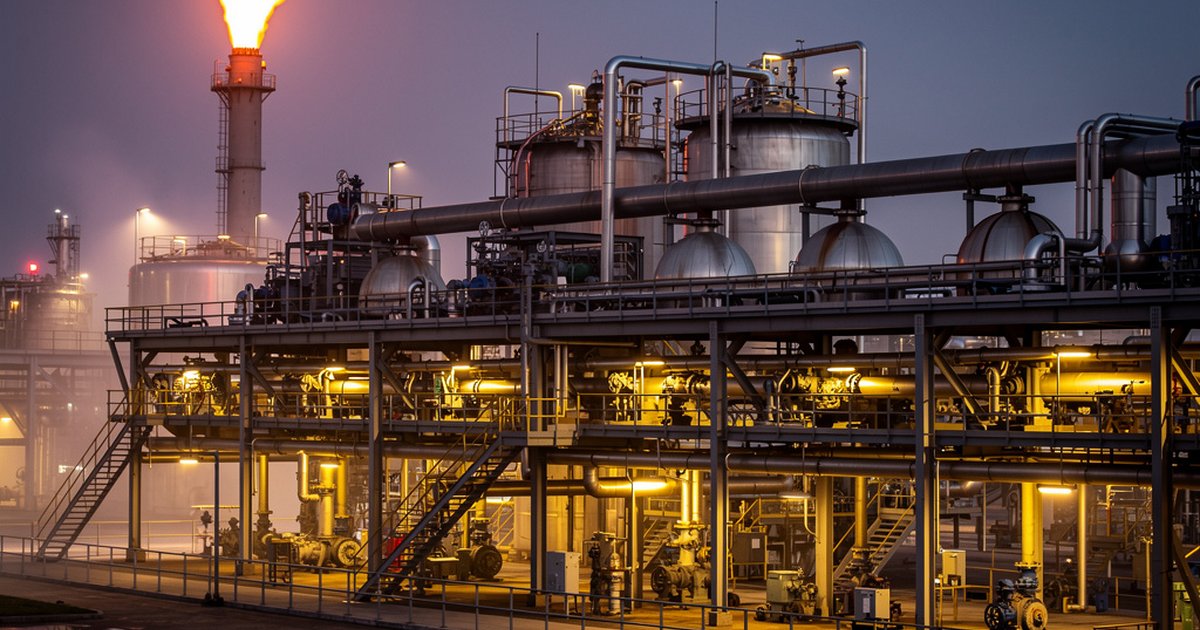
Hydrogen does not burn with a visible flame. Under most conditions, a hydrogen fire produces no smoke, no color, and no thermal radiation signature that a standard heat detector can reliably see. That single engineering fact should change how every fire protection engineer approaches hydrogen storage, compression, and distribution on an industrial facility — and it rarely does.
As hydrogen gains momentum across petrochemical operations, power generation, and Saudi Arabia’s emerging clean-energy industrial base, the gap between what existing fire protection systems can do and what hydrogen hazards actually require is widening. The same gap exists, to varying degrees, for other compressed gases — LPG, oxygen, acetylene — that have long been present on industrial sites but continue to generate disproportionate loss events when protection systems are designed by habit rather than by hazard analysis.
This article lays out the engineering fundamentals: what makes hydrogen and compressed gas hazards different, what detection and suppression strategies actually work, and how NFPA standards and Saudi Aramco’s SAES framework align — and diverge — on protection requirements.
Why Hydrogen Demands a Different Engineering Approach
Hydrogen’s physical properties are not merely inconvenient — they invalidate assumptions that are hardwired into conventional fire protection design. Its flammable range in air is exceptionally wide, from approximately 4% to 75% by volume. Its minimum ignition energy is orders of magnitude lower than most hydrocarbons, meaning electrostatic discharge from standard equipment can be sufficient to ignite a cloud. It rises and disperses rapidly, but in enclosed or partially confined spaces — compressor buildings, analyzer shelters, enclosed processing modules — it stratifies at ceiling level and accumulates into a flammable layer before conventional point detectors at mid-height register anything meaningful.
Hydrogen fires, when they do ignite, burn at extremely high temperatures and low luminosity. Conventional ultraviolet/infrared (UV/IR) flame detectors tuned for hydrocarbon combustion signatures often fail to reliably detect a hydrogen fire. Multi-spectrum IR detectors or dedicated hydrogen flame detectors with UV sensitivity and specific spectral filtering are required.
Then there is the jet fire hazard. High-pressure hydrogen released from a fitting failure, a valve seat leak, or a flexible hose rupture does not form a pool — it jets. A hydrogen jet fire impinging on an adjacent vessel or structural element delivers intense localized heat flux. Standard passive fireproofing calculations based on pool fire scenarios may significantly underestimate the structural load. Where high-pressure hydrogen is present, the jet fire scenario must be explicitly modeled or conservatively bounded in the fireproofing specification.
Compressed Gas Hazards Beyond Hydrogen: LPG, Oxygen, and Reactive Gases
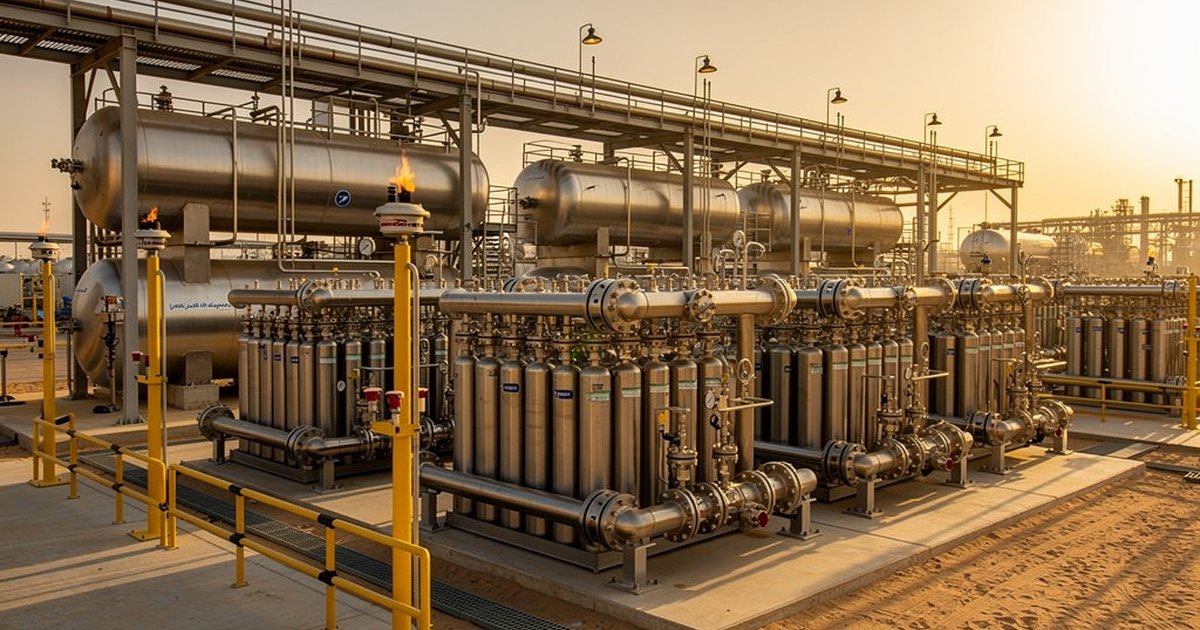
While hydrogen draws most of the engineering conversation, LPG cylinders and bulk storage, compressed oxygen, acetylene, and various specialty process gases each carry their own hazard profile that demands dedicated analysis.
LPG storage — whether bottled or in bulk tanks — introduces a BLEVE (Boiling Liquid Expanding Vapor Explosion) risk that fundamentally drives the protection strategy. NFPA 58 establishes the foundational requirements for LP-Gas installations, covering storage distances, impoundment, and fire exposure protection. The Saudi Aramco SAES framework applies additional separation and fireproofing requirements for bulk LPG storage within refinery and petrochemical fence lines. The key engineering discipline is ensuring that firewater cooling systems for LPG vessels are sized not merely for routine impingement protection, but for the fire exposure scenario sufficient to prevent vessel shell temperature from reaching the failure threshold before the liquid content can be safely managed.
Compressed oxygen presents a different risk: it does not burn, but it dramatically accelerates combustion in materials that would otherwise be relatively fire-resistant. Oxygen-enriched atmospheres reduce ignition energy requirements and increase flame spread rates for ordinary combustibles, insulation, and even certain metals. Facilities handling compressed oxygen must address separation from flammable gas systems, material compatibility — including pipe and valve specifications — and the prohibition on oil-based lubricants and sealants in oxygen service. NFPA 55 provides the governing framework for compressed and liquefied gases in general, while NFPA 50 addresses bulk oxygen storage specifically.
Acetylene deserves particular attention because it can detonate under pressure even in the absence of oxygen, driven by decomposition rather than combustion. This imposes special requirements on storage cylinder orientation, separation distances, and suppression strategy. Standard gaseous suppression agents effective on hydrocarbon fires are not always appropriate for acetylene; the relevant NFPA guidance and cylinder manufacturer specifications must be followed explicitly.
Detection Strategy: Getting the Sensor Technology Right
The detection layer is where hydrogen and compressed gas protection most frequently fails to match the hazard. A point-type catalytic bead combustible gas detector calibrated for methane may not respond accurately to hydrogen — calibration factors differ, and some sensor technologies exhibit cross-sensitivity errors that produce false readings in either direction. Electrochemical sensors designed specifically for hydrogen offer better selectivity but require attention to humidity, temperature range, and calibration frequency.
For hydrogen storage buildings, compressor rooms, and enclosed processing modules, a layered detection approach is appropriate:
- Fixed point detectors positioned at ceiling level to intercept rising hydrogen accumulation, with additional detectors at likely leak sources — valve stations, compressor seals, analyzer connections.
- Multi-point sampling systems for large enclosed volumes where point detectors alone may not provide adequate spatial coverage before a flammable layer develops.
- UV/multi-spectrum flame detectors with voting logic to minimize spurious activation while maintaining fast response to an actual flame.
- Pressure and flow anomaly monitoring integrated into the ESD logic to identify release signatures — sudden pressure drop in a supply line, unexpected flow rate deviation — before gas sensors confirm the event.
The detection system architecture must be integrated with the facility’s safety instrumented system (SIS) and ESD logic so that a confirmed gas detection signal triggers automatic isolation of the relevant section, ventilation activation where applicable, and suppression system pre-arm, without requiring manual intervention in the critical early seconds of a release event.
Suppression: Matching the Agent to the Hazard
Hydrogen fires present a specific suppression challenge: extinguishing the flame without eliminating the hydrogen supply creates an unburned flammable gas cloud that will reignite on contact with any ignition source. The preferred engineering approach, where operationally feasible, is isolation first — stop the release — and allow the hydrogen to burn off in a controlled manner rather than attempting suppression of a jet fire still fed by an active source. Dry chemical agents, including Purple K (potassium bicarbonate), are effective for interrupting hydrogen combustion, but their application must be coordinated with isolation to avoid the reignition scenario.
Water in fine mist or foam form is generally not recommended as the primary suppression agent for hydrogen jet fires; its cooling effect on gas-phase combustion is limited, and in enclosed environments, steam generation from water application can create additional hazards. Where water deluge is used for exposure protection — cooling adjacent vessels or structural elements exposed to a hydrogen fire — the system must be designed for the jet fire heat flux profile, not a pool fire equivalent.
For LPG BLEVE risk, fixed water cooling systems on storage vessels are the standard exposure protection strategy. Sizing must account for simultaneous demand on multiple vessels, elevated ambient temperatures characteristic of Saudi operating environments, and the requirement for sustained water application over the duration needed to bring vessel surface temperature under control.
NFPA and SAES Alignment: Where the Frameworks Meet and Where They Diverge
NFPA 2 (Hydrogen Technologies Code) and NFPA 55 (Compressed Gases and Cryogenic Fluids Code) establish the primary U.S. standards framework for these hazards. NFPA 2 addresses hydrogen production, storage, handling, and use across a wide range of applications and technology types. NFPA 55 provides broader coverage for compressed and liquefied gas systems in industrial settings, with specific chapters addressing storage quantity thresholds, separation distances, and detection requirements.
Within Saudi Aramco projects, the SAES framework — particularly standards governing flammable gas handling, pressure vessel protection, and ESD system design — overlays and in some cases supersedes the NFPA baseline. Saudi Aramco’s engineering standards generally impose more conservative separation distances and more prescriptive ESD integration requirements than NFPA minimums. Where a hydrogen or compressed gas installation is being engineered for a Saudi Aramco facility or for a project subject to Saudi Civil Defense review, the design team must work both frameworks in parallel, resolving conflicts by taking the more conservative requirement and documenting the engineering basis.
The documentation requirement itself deserves emphasis. Saudi Civil Defense inspections for facilities handling compressed flammable or toxic gases require not only the installed hardware to be correct, but the engineering basis — hazard identification records, detection zone layouts, ESD cause-and-effect matrices, suppression agent selection rationale — to be complete and available for review. Facilities that install the right equipment without the supporting engineering documentation routinely encounter compliance findings during inspections.
The Bottom Line
Hydrogen and compressed gas hazards are not exotic edge cases — they are present in some form on most petrochemical facilities, and their frequency of causing serious loss events is disproportionate to the engineering attention they typically receive at the design stage. The combination of unconventional flammable ranges, low ignition energies, detection technology limitations, and suppression strategy constraints means that standard fire protection design templates built around hydrocarbon liquid hazards do not transfer cleanly.
The engineering discipline required is straightforward: identify the actual hazard profile for each gas handled, select detection technology with specificity and placement suited to that hazard, design suppression and isolation strategies around the release-first scenario, and document the engineering basis to satisfy both NFPA and SAES compliance requirements. Facilities that complete this work before construction lock in the geometry are in a fundamentally better position than those that retrofit after a near-miss.
Work With Ignis Sentinel Engineering
Need a fire risk assessment, a third-party plan review, or an NFPA/SAES
compliance check for your facility? Our engineers help Saudi and international
industrial operators design safer operations.