

HiltonC

When a fire protection system fails — or when the paperwork behind it can’t hold up to scrutiny — the conversation very quickly stops being about engineering and starts being about money. In Saudi Arabia’s industrial sector, where the regulatory environment is layered, the projects are large, and the operators are globally visible, non-compliance with fire protection requirements carries consequences that extend well beyond a fine on a government form.
This article breaks down those consequences in concrete terms: operational, financial, legal, and reputational. If you’re an HSE manager, a project engineer, or an executive responsible for a facility in the Kingdom, this is the math you need to understand before you defer that inspection or approve a design that cuts corners on system coverage.
What “Non-Compliance” Actually Means in This Context
Fire protection non-compliance isn’t a single event. It’s a spectrum — and it surfaces at different points in a facility’s life cycle. It can mean a system that was never designed to the correct standard, a suppression system that hasn’t been inspected and tested per NFPA 25 requirements, a facility that was modified without updating the fire protection design, or a permit application that doesn’t align with Saudi Civil Defense (SCD) requirements.
In Saudi Arabia, the regulatory authority for fire protection in industrial and commercial facilities sits primarily with the Saudi Civil Defense (Difa’ Madani), which enforces compliance through licensing, inspections, and occupancy approvals. For facilities operating under Saudi Aramco’s umbrella — or bidding on Aramco projects — the SAES (Saudi Aramco Engineering Standards) layer adds a second, parallel compliance obligation with its own technical depth and documentation requirements.
Violating either framework — or both simultaneously — sets off a cascade of consequences that most operators significantly underestimate until they’re in the middle of one.
Operational Shutdown: The Fastest and Most Painful Consequence
The most immediate consequence of a confirmed fire protection deficiency is facility shutdown or restriction of operations. Saudi Civil Defense has the authority to suspend occupancy certificates and halt operations at facilities that fail inspections or are found to have systems in a state of non-compliance. This isn’t a hypothetical threat — it’s a routine enforcement action, particularly in the industrial and petrochemical sectors where fire risk is elevated and public scrutiny is higher.
For a production facility, shutdown costs are not abstract. They include lost production output, idle workforce costs, contractual penalties tied to delivery obligations, and the cost of emergency remediation work performed under pressure. Depending on the facility type, a single week of unplanned shutdown can generate losses that dwarf the entire multi-year cost of a properly maintained fire protection program.
The compounding factor is timing. A shutdown triggered by a failed SCD inspection doesn’t arrive on a convenient schedule. It arrives during a commissioning sprint, during peak production, or during the final stages of a project handover — precisely when remediation is most disruptive and most expensive.
Financial Penalties and Licensing Consequences
Beyond shutdown, non-compliant facilities face direct financial penalties through the SCD enforcement process. Facilities that fail to rectify noted deficiencies within prescribed timeframes can face escalating fines, revocation of operating licenses, and mandatory re-inspection fees that accumulate quickly when systemic problems are involved rather than isolated deficiencies.
For facilities operating under contract with Saudi Aramco or other national operators, the financial exposure widens further. SAES compliance is contractually embedded in most Aramco project agreements. A facility or vendor found to have delivered fire protection systems that do not meet applicable SAES requirements can face contract penalties, rejection of deliverables, and disqualification from future bid lists. In a market where Aramco relationships represent substantial long-term revenue, that disqualification consequence alone can be catastrophic.
Insurance compounds the picture. Industrial property and business interruption policies routinely include fire protection compliance warranties. A claim filed against a facility where inspections were overdue, deficiencies were undocumented, or systems were out of service without a documented impairment management program may result in partial or full denial of coverage. The carrier’s position is straightforward: you agreed to maintain the system, you didn’t, and now you want us to pay for the result.
Reputational Damage: The Longest-Lasting Cost
In the Saudi industrial market, reputation travels fast and sticks hard. A facility that experiences a fire incident — particularly one where post-incident investigation reveals that the suppression system was non-functional, improperly designed, or last inspected outside required intervals — will face a level of scrutiny that extends far beyond the incident itself.
For engineering firms and contractors, the reputational stakes are even higher. A fire incident traced to a design deficiency or an inspection failure becomes part of the project record. Saudi Aramco maintains detailed vendor and contractor performance databases. A compliance failure associated with a delivered project affects future pre-qualification, bid scoring, and work allocation — sometimes for years after the underlying issue has been corrected.
For facility owners and operators, the reputational dimension extends to relationships with regulators, insurers, lenders, and joint venture partners. None of these stakeholders want to be associated with a facility that has a documented history of fire protection deficiencies, and all of them have mechanisms to reduce their exposure at the operator’s expense.
The Root Cause: Deferred Maintenance and Design-Phase Gaps
Most fire protection non-compliance in industrial facilities doesn’t begin with deliberate negligence. It begins with deferred decisions — an inspection that gets pushed because the system is “probably fine,” a design review that gets truncated because the project is behind schedule, a modification to a hazard area that doesn’t trigger a formal re-evaluation of the fire protection coverage.
NFPA 25, the standard for inspection, testing, and maintenance of water-based fire protection systems, establishes specific minimum frequencies for every category of system component — from quarterly inspections of alarm valves to annual flow testing of sprinkler systems to five-year internal inspections of system piping. These aren’t suggestions. They are the baseline below which a system cannot reasonably be called compliant or relied upon to perform in a fire event.
When those intervals slip, the facility accumulates what might be called a compliance debt — a growing gap between the system’s documented state and its actual state. That debt accrues silently, invisible in normal operations, and then becomes very visible very quickly when an inspection occurs, an incident happens, or a contract requires documented proof of maintenance history.
What a Compliant Program Actually Looks Like
Closing the compliance gap isn’t complicated, but it does require deliberate structure. A compliant fire protection program for a Saudi industrial facility has four non-negotiable components:
- A current, code-compliant design basis. Every fire protection system should trace back to a design that meets the applicable NFPA standard and any applicable SAES requirements, with documentation of the hazard classification, system selection rationale, and design parameters.
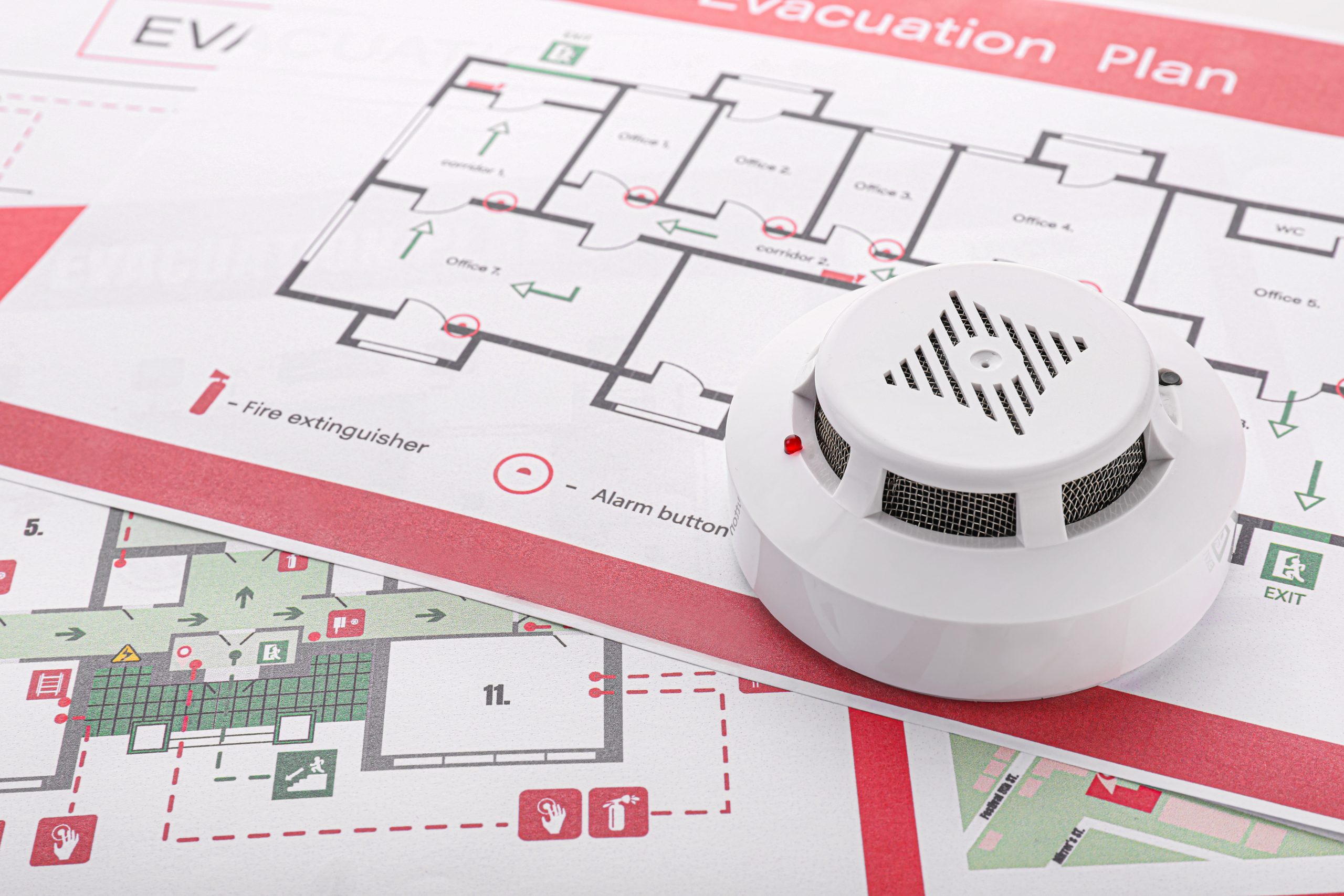
- A documented inspection, testing, and maintenance schedule. Tied to NFPA 25 (for water-based systems) or the relevant standard for other system types, with records maintained and accessible to regulators and insurers on demand.
- A formal impairment management program. Covering any situation where a system or portion of a system is taken out of service, with documented compensatory measures, notification procedures, and restoration timelines.
- Third-party plan review and compliance verification. Particularly for new construction, major modifications, and pre-commissioning milestones, independent engineering review provides a documented record that the design and installation meet applicable standards — and gives operators defensible ground if questions arise later.
The Bottom Line
Fire protection compliance is not an administrative burden sitting alongside the real work of running an industrial facility. It is a direct operational and financial risk management function. The cost of maintaining a compliant program — inspection contracts, engineering reviews, system upgrades when required — is predictable, manageable, and small relative to the cost of a single enforcement action, a denied insurance claim, or a disqualification from a major Aramco contract.
The operators who treat compliance as a system — designed, scheduled, documented, and reviewed — don’t face these consequences. They have the paperwork, the maintenance records, and the engineering basis to demonstrate that their systems will perform when they’re needed. That’s not just a regulatory outcome. It’s an operational one.
The operators who treat compliance as something to get to eventually are the ones who find out what non-compliance actually costs — usually at the worst possible time.
Work With Ignis Sentinel Engineering
Need a fire risk assessment, a third-party plan review, or an NFPA/SAES
compliance check for your facility? Our engineers help Saudi and international
industrial operators design safer operations.