

HiltonC
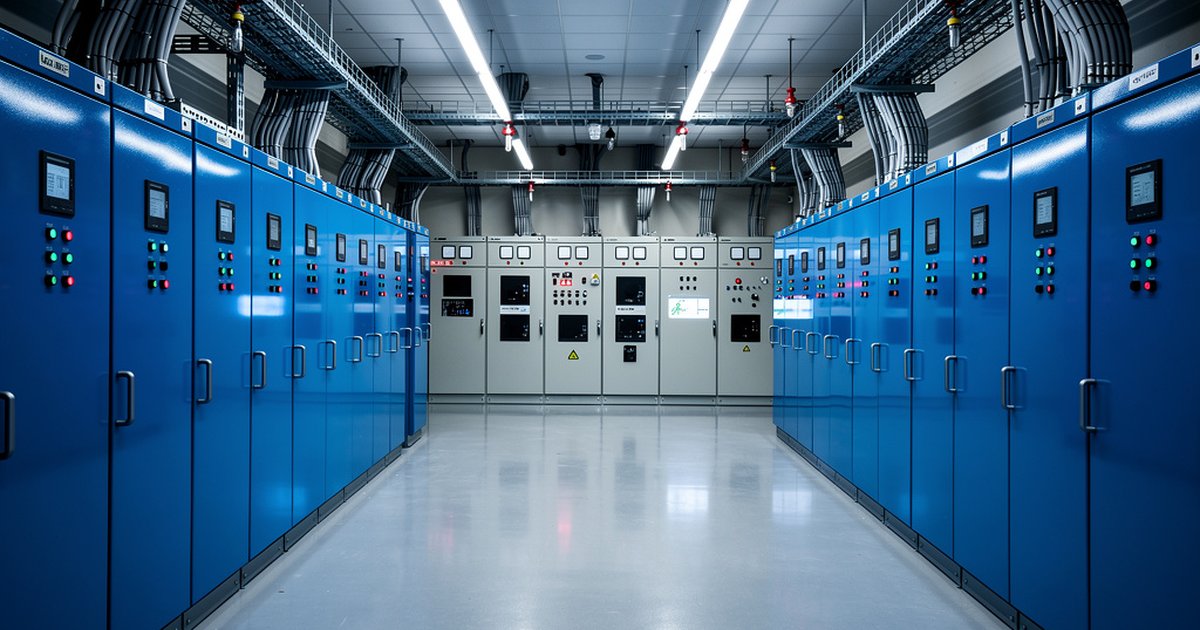
An electrical fire in a process facility doesn’t just threaten the building — it threatens the entire operation. Switchgear rooms, motor control centers, main distribution boards, and electrical substations are the nerve centers of industrial production. Lose them to fire, and the facility goes dark. Lose them to a poorly chosen suppression system, and the damage compounds: equipment soaked or contaminated, restart timelines measured in weeks, and an investigation that traces the root cause not to the fire itself, but to the fire protection design.
This is the underappreciated irony of electrical room fire protection: the suppression strategy, if engineered incorrectly, can cause more destruction than a controlled burn. Getting this right is not a minor engineering detail. It is a high-consequence design decision that requires deliberate analysis of occupancy type, detection strategy, suppression agent selection, structural fire rating, and regulatory compliance — all before a single specification is written.
Why Electrical Rooms Are a Distinct Fire Protection Challenge
Standard industrial fire protection logic — water suppression for area coverage, foam for flammable liquid hazards — does not translate cleanly to electrical environments. The reasons are both physical and operational.
From a physical standpoint, water and electrically energized equipment are a dangerous combination. Applying a water-based suppression agent to live switchgear creates immediate shock hazards, accelerates corrosion, and can cause catastrophic short circuits across adjacent components that were undamaged by the original fire. In high-voltage environments, the risk extends to the suppression system responders themselves.
From an operational standpoint, the equipment housed in these rooms is often irreplaceable on short timelines. Medium-voltage switchgear, transformer assemblies, and protection relay panels are not off-the-shelf items. Lead times for replacement can extend to months. An aggressive suppression response that controls the fire but saturates the room may result in a faster containment and a longer outage than a precisely targeted clean-agent system that suppresses the hazard without collateral damage.
The design challenge, then, is suppressing fire effectively while preserving both life safety and equipment integrity — and doing so within a tightly defined space where detection speed is critical and agent distribution must be engineered for the specific room geometry and hazard profile.
Detection Strategy: Speed and Discrimination Matter
Electrical fires in switchgear rooms and motor control centers rarely announce themselves with open flame. The progression typically begins with insulation degradation, overheating conductors, or arc flash events — all of which produce measurable thermal and particulate signatures well before visible combustion begins. A detection system that waits for flame or heavy smoke is already late.
The engineering answer is a layered detection approach. Early-warning systems — aspirating smoke detection (ASD) in particular — pull continuous air samples from within and around electrical enclosures, providing sensitivity at concentrations that conventional spot detectors cannot resolve. These systems can detect pyrolysis products from degrading insulation before the smoldering phase fully develops, giving operators a meaningful intervention window.
Aspirating systems should be paired with conventional addressable point detectors to provide zonal confirmation and redundancy. In facilities operating under NFPA 72 as adopted or referenced by Saudi Civil Defense requirements, addressable system design, notification appliance coverage, and panel-level supervision all carry compliance weight. The detection design must account not only for the room interior but also for cable trays, sub-floor voids, and overhead cable management zones — all of which represent concealed ignition pathways that surface detection alone will not adequately cover.
Where arc flash events are a credible hazard — particularly in high-voltage switchgear — optical arc flash detection provides response times measured in milliseconds, well ahead of what any smoke or thermal detector can achieve. Integration of arc flash detection into the overall fire alarm and suppression control sequence requires careful engineering review to ensure that nuisance-trip suppression releases are appropriately guarded against.
Suppression Agent Selection: The Engineering Decision That Defines Everything Else
For most electrical room applications, clean agent gaseous suppression is the engineered solution of choice. These systems discharge a suppression agent — typically a halon alternative such as FK-5-1-12 (Novec 1230) or HFC-227ea — that achieves extinguishing concentration within the protected space in seconds, without leaving residue, without conducting electricity, and without damaging the equipment it contacts.
The selection between specific clean agents involves analysis of several variables:
- Space geometry and integrity: Total flooding clean agent systems depend on a sealed enclosure to hold extinguishing concentration for a defined hold period — typically ten minutes minimum. Room integrity testing, conducted per accepted industry practice, must confirm that the protected enclosure can maintain concentration without excessive leakage through doors, cable penetrations, HVAC openings, and structural gaps. A room that fails integrity testing cannot be reliably protected by a total flooding system until the integrity issues are resolved.
- Environmental and regulatory profile: Some agents carry ozone depletion potential or global warming potential values that affect permitting and long-term serviceability. Selection should account for current and anticipated environmental regulations in the jurisdiction of operation.
- Safety to occupants: Agent concentration, decomposition products at fire temperatures, and room evacuation sequencing must all be verified for occupied or potentially occupied spaces. NFPA 2001 provides the engineering framework for clean agent system design, including safety factors, agent quantities, and discharge timing requirements.
- Cost and agent availability: Agent resupply after discharge is a logistical consideration in remote or internationally operating facilities. Agent storage conditions, cylinder count, and distribution network within the room must be engineered for reliable and complete coverage.
In some applications — particularly large substations or outdoor switchgear yards — a clean agent total flooding approach is not architecturally feasible. In these cases, water mist technology offers a middle-ground option: fine droplet distribution that significantly reduces heat and oxygen availability while limiting the water volume applied to equipment. High-pressure water mist systems designed to NFPA 750 standards have demonstrated effectiveness in electrical hazard applications, but their selection requires careful engineering review of droplet size, application rate, and system pressure relative to the specific hazard geometry.
Water spray systems designed to NFPA 15 for de-energized equipment exposure control — particularly transformer cooling and external protection — represent yet another distinct application that must not be conflated with interior electrical room suppression. Transformer yard protection and indoor switchgear room protection are fundamentally different engineering problems, even when they occupy the same facility footprint.
Structural Fire Rating and Separation Requirements
Beyond suppression and detection, the physical envelope of electrical rooms and substations carries its own engineering requirements. Structural fire rating — the rated fire resistance of walls, floors, ceilings, and doors — determines how long the protected space can maintain compartment integrity during a fire event, both protecting the contents from external fire exposure and limiting fire spread from an internal event to adjacent areas of the facility.
Industrial electrical buildings in Saudi facilities routinely operate under dual frameworks: NFPA standards as adopted into project specifications, and Saudi Aramco Engineering Standards (SAES) that govern facility design for Aramco-operated or Aramco-adjacent projects. SAES requirements for electrical building design address fire resistance ratings, separation distances from process areas, egress configuration, and coordination between fire protection and process safety systems. Where project specifications invoke both frameworks, the engineer of record must identify and reconcile any differences — and document the resolution for authority having jurisdiction (AHJ) review.
Cable penetrations deserve particular attention. Electrical buildings are invariably penetrated by large numbers of conduits and cable trays passing through rated walls and floors. Each penetration is a potential compromise of the fire rating and a pathway for fire and smoke spread. Engineered firestop systems — correctly specified, correctly installed, and correctly documented — are a non-negotiable element of the structural fire protection strategy. Penetration schedules should be reviewed at design, verified at installation, and included in the as-built record package.
Integration with Facility-Wide Fire Protection Systems
Electrical room fire protection does not exist in isolation. The detection, suppression, and alarm systems within the room must integrate cleanly with the facility-wide fire alarm system, emergency shutdown (ESD) logic, HVAC control sequences, and facility response protocols.
Suppression release sequences typically require coordination between detection confirmation (cross-zone or pre-action logic to prevent accidental discharge), HVAC shutdown to prevent agent dilution, door hold-open release to support room integrity, and alarm notification to the facility control room and responding teams. Each of these sequences must be mapped in the system cause-and-effect documentation and tested during commissioning before the system is placed in service.
Facilities operating under NFPA 72 for fire alarm integration, NFPA 2001 for clean agent suppression, and Saudi Civil Defense requirements for overall compliance must ensure that the integrated system design satisfies each framework’s supervisory, monitoring, and testing requirements. Third-party plan review and witness testing — conducted by a qualified fire protection engineer — provides the independent verification that these systems are commission-ready before the AHJ inspection.
The Bottom Line
Electrical rooms are not a standard fire protection application — they are a specialized engineering problem with consequences that extend well beyond the fire event itself. A suppression agent that damages irreplaceable switchgear, a detection system that responds too late to stop arc flash propagation, a room envelope with unfirestopped cable penetrations, or a suppression sequence that fails to coordinate with HVAC and ESD systems: any one of these failures can turn a survivable fire into a months-long production shutdown.
The engineering discipline to get this right exists. NFPA 2001, NFPA 72, NFPA 750, NFPA 15, and applicable SAES standards collectively provide the framework. What facilities need is an engineer who understands how those frameworks interact — and who is experienced enough to make the right call when the standards require interpretation.
Don’t let the electrical room be the gap in your facility’s fire protection design.
Work With Ignis Sentinel Engineering
Need a fire risk assessment, a third-party plan review, or an NFPA/SAES
compliance check for your facility? Our engineers help Saudi and international
industrial operators design safer operations.