

HiltonC
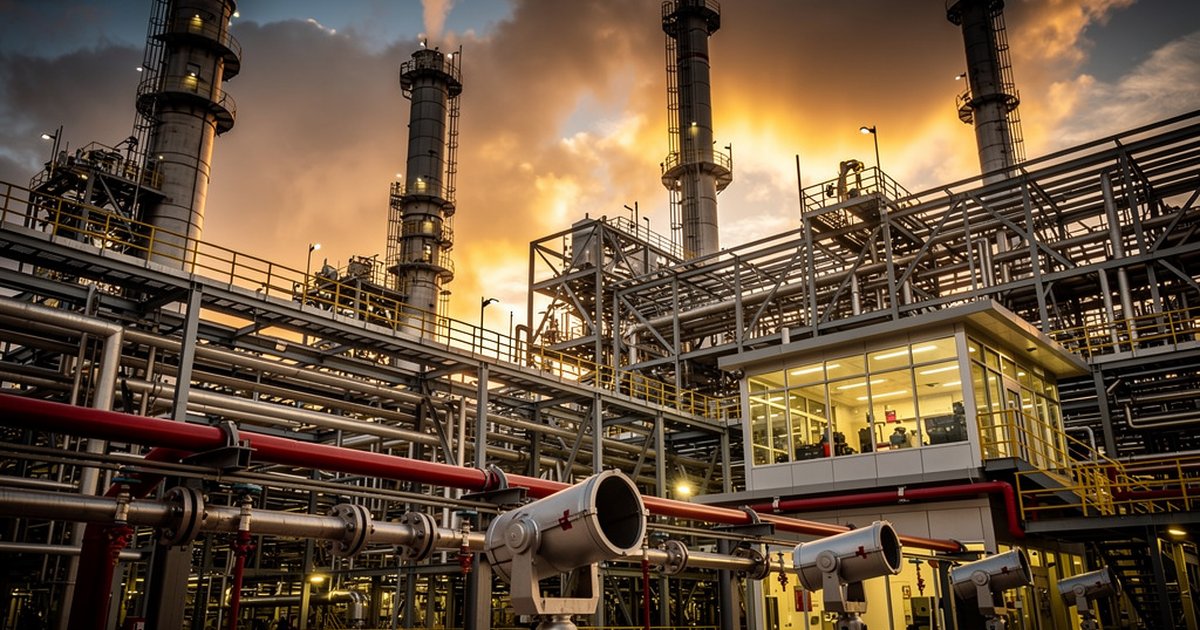
Every major industrial fire investigation eventually arrives at the same uncomfortable conclusion: the physical fire was not the root cause. The root cause was a system — a management system, a maintenance system, a decision-making system — that had been quietly failing for months or years before the ignition event. The heat, the flame, the structural damage? Those were the consequences. The causes were upstream, invisible, and correctable.
Fire-protection engineers who study major incident reports are not looking at history. They are looking at a mirror. The same failure categories appear across industries and geographies. Understanding them is not an academic exercise — it is the most direct path to preventing the next one.
Failure Category 1: Mechanical Integrity Gaps
The majority of process-industry fires are preceded by an uncontrolled release of flammable material. That release almost always traces back to a failure of mechanical integrity — a corroded nozzle, a fatigued flange, a heat exchanger bundle that had been flagged in an inspection report and deferred. Deferred. Not missed. Deferred.
NFPA 652 and the broader family of NFPA combustible-dust and flammable-liquids standards are explicit about the requirement for ongoing integrity management programs. Saudi Aramco Engineering Standards carry parallel requirements, particularly for pressure vessels, piping systems, and storage tanks operating with flammable or combustible contents. The standard exists. The problem is organizational: inspection findings get categorized, prioritized, and — under budget or schedule pressure — deprioritized.
The engineering lesson is structural. An integrity management program that generates findings but does not have a closed-loop corrective action process is not a program — it is a documentation exercise. For any facility managing hydrocarbon inventories, the integrity tracking system must be tied directly to a risk-ranked corrective action register, with escalation authority that cannot be quietly overridden by production scheduling.
Practically, this means the fire-protection engineer’s role extends beyond passive system design. During any third-party plan review or hazard analysis engagement, the question “what is the mechanical integrity status of the equipment upstream of this fire scenario?” should be asked and answered before a suppression system is sized.
Failure Category 2: Management of Change Without Hazard Re-Evaluation
Process facilities are not static. They are modified — sometimes incrementally, sometimes dramatically — over their operational lifespans. A pipe rerouted to improve throughput. A relief valve resized after a capacity upgrade. A new storage tank added to an existing dike. Each of these changes seems manageable in isolation. What the incident reports reveal is that without a rigorous Management of Change (MOC) process that includes a formal fire-hazard re-evaluation step, changes accumulate into scenarios the original fire-protection design was never intended to address.
A foam-water deluge system designed for a tank farm with a specific tank diameter, liquid type, and dike geometry cannot be assumed adequate after a tank replacement or product changeover. NFPA 11, which governs low-expansion foam systems, is explicit that system design parameters — application rate, concentration, solution volume — are tied to the specific hazard scenario. Any change to that scenario triggers a re-evaluation obligation. The same principle runs through the SAES engineering framework for protected facilities.
The organizational trap here is that MOC processes often do a reasonable job of capturing major capital projects and a poor job of capturing small operational changes. Yet the incident data shows that small changes — a blind flange installed temporarily and left permanently, a drain valve rerouted outside the dike wall — are disproportionately represented in the causal chains of major fires. The fire-protection system was not wrong when it was designed. It became wrong, incrementally, through changes that were never re-evaluated against the original fire scenarios.
Failure Category 3: Alarm Flooding and Control Room Decision Degradation
Modern process facilities generate a significant volume of instrumentation alarms. In a well-configured facility, an alarm represents an actionable, time-critical signal that demands operator response. In a facility where alarm rationalization has not been maintained, an alarm is background noise. Operators in flooding-alarm environments develop adaptive behaviors that allow them to keep functioning — but those behaviors involve suppression, acknowledgment without response, and threshold desensitization.
The engineering consequence in a fire scenario is predictable: when a genuine early-stage fire signal appears in a control room receiving hundreds of alarms per hour, operator recognition and response time degrades. What could have been a confined incident — a small vapor cloud detected by a point gas sensor, a temperature deviation in a heat exchanger — becomes a fully developed event before a decisive response is initiated.
NFPA 72, the National Fire Alarm and Signaling Code, contains requirements for fire alarm signal prioritization and audibility that are relevant here, but the larger issue is process safety alarm management — addressed in standards like ISA-18.2 and referenced in API guidance for petrochemical facilities. Saudi Aramco’s engineering requirements for instrumented protective functions recognize the interdependency between fire-and-gas detection systems and the broader process alarm architecture.
For facility engineers and HSE managers, the lesson is that fire-detection reliability is not only a sensor coverage question. It is also an organizational signal-to-noise question. A fire-and-gas detector that generates a valid alarm into a control room that is already desensitized to alarms is less reliable in practice than its technical specification suggests.
Failure Category 4: Layer of Protection Assumptions That Were Never Validated
Layer of Protection Analysis (LOPA) has become a standard tool in process hazard analysis. The concept is sound: multiple independent protection layers — a pressure relief valve, a high-level trip, a dike containment system, a foam suppression system — each reduce the likelihood of a catastrophic outcome. The compound reliability of independent layers is what justifies the tolerable risk determination for a given scenario.
What the incident record demonstrates is a recurring failure of the “independent” and “reliable” assumptions. A pressure relief valve that had not been tested within its required interval. A high-level trip that shared a common instrument air supply with the initiating cause of the scenario. A dike drain valve that was found open after the incident, eliminating the containment function entirely. In each case, a protection layer that was credited in the hazard analysis was not delivering its assumed probability of failure on demand.
For fire-protection engineers, this has direct implications for system design and for third-party review. A foam suppression system that is credited as a protection layer in a LOPA must actually achieve the detection-to-application speed, coverage, and foam-solution concentration that the LOPA model assumed. If the detection system has unaddressed coverage gaps, if the foam concentrate supply is undersized for the full-demand scenario, or if the deluge valve actuation has not been functionally tested under realistic conditions, the credited protection layer is not performing as documented.
NFPA 25, the standard for inspection, testing, and maintenance of water-based fire protection systems, exists precisely to close this gap — to ensure that the system installed and credited in the hazard analysis remains the system that will respond in an actual event. The ITM frequency requirements in NFPA 25 are not administrative burdens. They are the mechanism by which protection layer reliability is maintained over the operational life of the facility.
The Organizational Thread Running Through All Four Categories
Mechanical integrity gaps, MOC failures, alarm flooding, and unvalidated protection layer assumptions are technically distinct failure modes. But they share an organizational root: each represents a situation where a known requirement existed, and the organizational system around it was not strong enough to ensure it was met. The standard was not the problem. The gap between the standard and operational practice was the problem.
For fire-protection engineers engaged in industrial work — particularly in the Saudi Arabian operating environment, where the regulatory framework combines NFPA standards, SAES requirements, and Saudi Civil Defense codes — this is the core diagnostic insight. A technically correct design, installed in a facility with weak MOC discipline, poor alarm management, and irregular ITM compliance, will not perform as designed when it is needed.
The engineering value-add is not only in the system design. It is in the audit, the gap analysis, the third-party review that asks hard questions about how the facility is actually being operated — not just how it was originally designed to be operated.
Bottom Line
The major industrial fires documented in incident databases are not mysteries. Their root causes are consistent, well-understood, and preventable. Mechanical integrity failures, management-of-change gaps, alarm-environment degradation, and unvalidated protection layer assumptions account for a disproportionate share of serious fire events across the process industries.
The standards exist. NFPA 11, 25, 30, 72, and the SAES framework collectively address every one of these failure categories. The question every facility operator should be asking is not whether their fire-protection systems comply with the standard at the time of installation — but whether they still comply today, and whether the operational practices around those systems are strong enough to ensure they perform when they are needed.
That question is worth asking before a fire investigator asks it for you.
Work With Ignis Sentinel Engineering
Need a fire risk assessment, a third-party plan review, or an NFPA/SAES
compliance check for your facility? Our engineers help Saudi and international
industrial operators design safer operations.