

HiltonC
Every industrial operator in Saudi Arabia who stores flammable or combustible liquids lives under two regulatory realities at once. The first is NFPA 30, the globally recognized Flammable and Combustible Liquids Code that anchors most international engineering practice. The second is Saudi Aramco’s Engineering Standards — the SAES family — which governs facilities operating within or adjacent to Aramco’s supply chain and which the Saudi Civil Defense increasingly references for high-hazard occupancies. These two frameworks share a common goal: prevent ignition, contain spills, and limit fire spread. But the path each takes to get there is different enough that engineers and HSE managers who assume they are interchangeable will find gaps at exactly the wrong moment — during a regulatory audit, a plan review, or an incident investigation.
This article provides a side-by-side comparison of the two standards across the areas that matter most to Saudi industrial operators: liquid classification, storage configuration, containment, venting, electrical area classification, and inspection obligations. The goal is not to declare one standard superior to the other — it is to help you understand where they align, where they diverge, and what that means for your compliance posture.
Liquid Classification: A Starting Point That Sets Everything Else
NFPA 30 classifies flammable and combustible liquids primarily by flash point. Class I flammable liquids have a flash point below 100°F (37.8°C); they are further divided into IA, IB, and IC based on flash point and boiling point. Combustible liquids fall into Class II (flash point 100–140°F) and Class III (above 140°F). This hierarchy drives storage quantity limits, container requirements, building construction, ventilation, and suppression system selection.
Saudi Aramco’s standards approach liquid classification with equivalent rigor but tie classifications more explicitly to specific process streams common in the Kingdom’s upstream, downstream, and midstream operations. Crude oil, condensate, NGL fractions, and refined products each carry well-defined hazard characterizations within SAES documents, and those characterizations are cross-referenced against process safety documentation — including HAZOPs and QRAs — in a way that NFPA 30 does not formally require. For facilities handling mixed streams or products that straddle classification thresholds, the SAES approach demands more explicit documentation of the worst-case liquid in the storage inventory. This is not a minor procedural difference: misclassifying a product that behaves as a Class IB liquid under process conditions but is labeled as Class II under ambient flash point testing is the kind of gap that surfaces in incident investigations.
Storage Configuration and Separation Distances
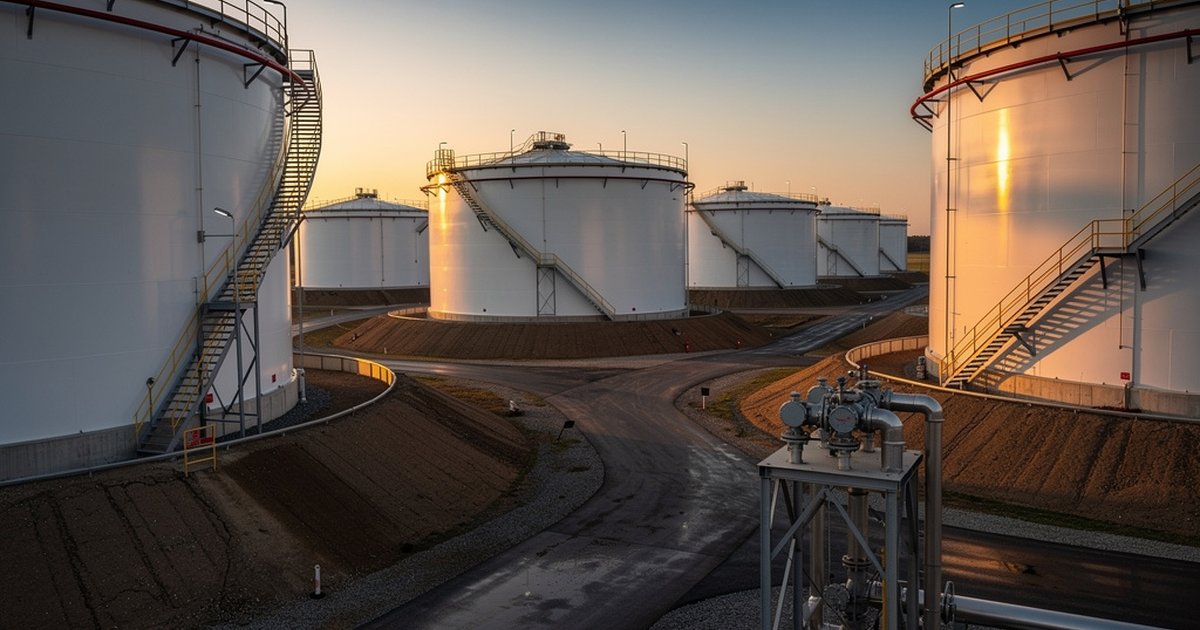
NFPA 30 provides detailed tables for separation distances between above-ground storage tanks (ASTs), between tanks and property lines, and between tanks and important buildings or process equipment. These distances are tied to tank diameter, capacity, and liquid class, and they may be reduced where approved suppression systems are installed. The 2024 edition of NFPA 30 introduced updated guidance on spacing for tanks storing high-flash mixtures and consolidated provisions related to floating-roof tanks, which are the dominant tank type in Saudi petrochemical storage.
SAES-B-006 and related Aramco engineering standards establish separation distances that are in many cases more conservative than NFPA 30 minimums for equivalent tank sizes. This reflects both the density of infrastructure on large Aramco operating areas and the Kingdom’s expectation that facilities within or adjacent to its network operate at a margin above global minimums. For new facility design, the engineering consequence is clear: use SAES distances as the design basis if the project falls within Aramco’s scope, and verify against NFPA 30 to ensure you are not inadvertently below the international floor in any dimension. For brownfield facilities designed to earlier NFPA editions, a gap analysis against current SAES requirements is a necessary step before any capacity expansion or major modification.
Secondary Containment: Where the Two Standards Diverge Most Sharply
NFPA 30 requires secondary containment — typically earthen dikes, concrete dike walls, or equivalent systems — for above-ground tanks holding Class I or Class II liquids above certain quantity thresholds. The code specifies minimum dike height, maximum number of tanks per diked area, and drainage requirements. A key provision governs the volume that secondary containment must hold: at minimum, the full capacity of the largest tank in the diked area, with freeboard for anticipated precipitation in the region.
SAES standards apply similar dike volume requirements but layer on additional requirements specific to the Kingdom’s operating environment. In some configurations, Saudi Aramco engineering standards require foam dams within the diked enclosure — barriers that prevent burning liquid from spreading across the full dike area, effectively compartmentalizing a fire before suppression systems activate. This is particularly relevant for large tank farms storing crude oil or light refined products, where a full-dike fire scenario would overwhelm suppression resources. NFPA 30 does not prohibit foam dams but does not mandate them for general flammable-liquid storage; for facilities subject to SAES requirements, this is a design element that must be accounted for in both engineering drawings and suppression system sizing.
Drainage design is another point of divergence. NFPA 30 addresses drainage from diked areas with a focus on preventing liquid from reaching public waterways or drains connected to structures. SAES requirements in the context of Aramco facilities additionally address hydrocarbon release to the environment under Saudi environmental regulations, which have tightened considerably since 2020. A containment system that satisfies NFPA 30’s drainage provisions may still require modification to meet current SAES and environmental compliance obligations.
Venting, Pressure Relief, and Atmospheric Tank Design
Both NFPA 30 and relevant API standards (API 650, API 2000) govern venting requirements for atmospheric storage tanks. The interaction between NFPA 30 and API 2000 for normal and emergency venting is well established in international practice. SAES-D-001 and related Aramco documents incorporate API requirements but apply specific criteria for emergency venting capacity that account for the worst-case fire exposure scenario defined within Aramco’s hazard modeling framework. For floating-roof tanks, seal design and drain configurations are addressed in Aramco standards in greater detail than in NFPA 30 alone, reflecting operational experience with the specific product streams and ambient temperature ranges common in the Eastern Province and Rub’ al Khali basin areas.
One practical implication: facilities that commission their vent sizing calculations using NFPA 30 and API 2000 without cross-checking against applicable SAES documents may produce designs that pass international third-party review but require revision during Aramco’s internal engineering review process. Running the cross-check early — at the 30% design stage — prevents rework at a point in the project when changes are costly.
Electrical Area Classification and Ignition Control
NFPA 30 references NFPA 70 (the National Electrical Code) and NFPA 497 for electrical area classification around flammable-liquid storage. The classified area extents are defined around tank vents, seal areas on floating-roof tanks, dispensing equipment, and dike areas. SAES-B-068 provides Saudi Aramco’s area classification requirements and is grounded in the same IEC 60079 and API RP 505 methodologies, but applies Aramco-specific zone extents and equipment selection criteria. In practice, SAES zone extents for certain configurations — particularly around floating-roof tank seals — have historically been more conservative than the minimums in NFPA 497 tables. Electrical equipment installed within these zones must carry documentation acceptable to Saudi Aramco’s inspection regime, which has specific approved equipment databases and vendor qualification requirements that are separate from the UL or FM approval pathways dominant in North American projects.
Inspection, Testing, and Maintenance Obligations
NFPA 30 itself is not an inspection and maintenance standard in the same depth that NFPA 25 addresses water-based suppression systems. It references good engineering practice for tank integrity and references API 653 for above-ground storage tank inspection. Saudi Aramco’s inspection obligations for storage tanks under its operational control are codified in SAES-D-005 and related documents, which establish internal inspection intervals, thickness measurement requirements, settlement monitoring, and the qualification requirements for inspection personnel. These are not optional guidance documents — they carry contractual and regulatory force for facilities within Aramco’s scope, and their requirements feed directly into maintenance turnaround planning and capital expenditure budgeting.
For HSE managers at Saudi industrial facilities who are not direct Aramco subsidiaries but who supply to or operate in proximity to Aramco infrastructure, the practical obligation is to understand which SAES documents apply to your facility’s specific scope of work or operating license, then build those requirements into your inspection program alongside NFPA 25 and API 653 obligations. Running two separate inspection programs — one for international standards, one for Saudi requirements — without integrating them into a single asset integrity framework is operationally inefficient and creates documentation gaps during audits.
The Bottom Line
NFPA 30 and Saudi Aramco’s SAES standards are not competing systems — they are layered obligations, and in most areas where they address the same physical requirement, SAES either meets or exceeds NFPA 30’s provisions. The risk for Saudi industrial operators is not that these standards contradict each other in ways that create impossible engineering choices. The risk is assuming alignment where divergence exists, and discovering those gaps during a plan review rejection, a Civil Defense inspection, or an Aramco engineering audit rather than during design. A systematic side-by-side review at project initiation — identifying which standard governs each requirement and documenting the basis for every design decision — is the most reliable way to move through the project lifecycle without costly resets. That review is exactly the kind of work that separates a credible fire protection engineering process from one that is simply checking boxes.
Work With Ignis Sentinel Engineering
Need a fire risk assessment, a third-party plan review, or an NFPA/SAES
compliance check for your facility? Our engineers help Saudi and international
industrial operators design safer operations.