

HiltonC
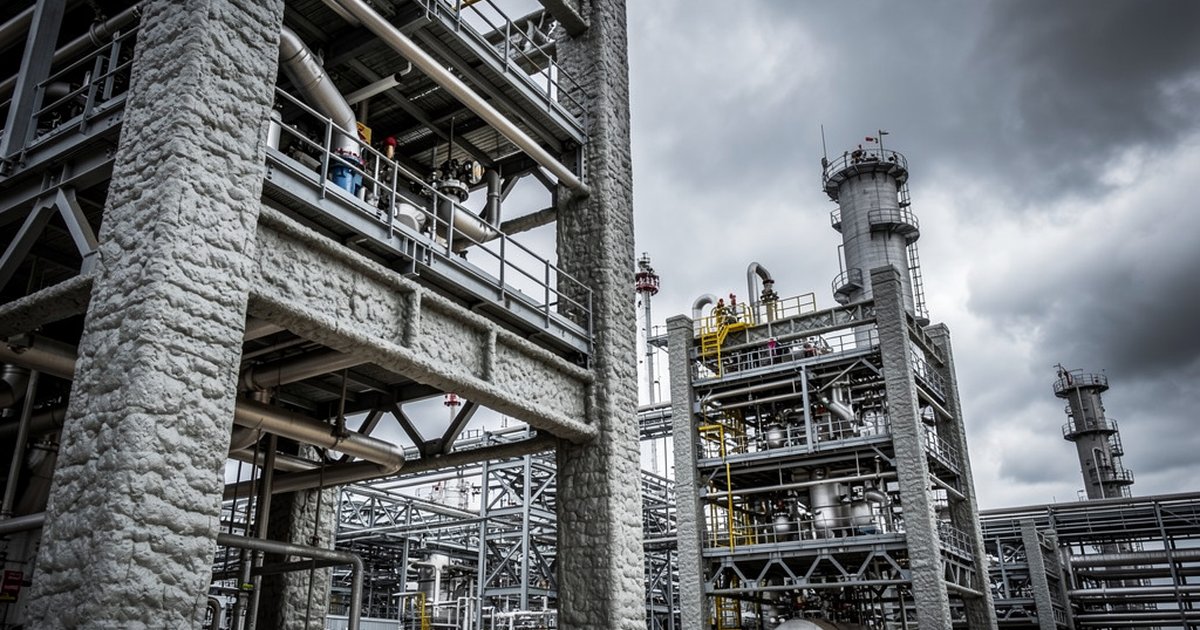
A hydrocarbon fire at an industrial facility doesn’t need hours to compromise structural integrity. Under a pool-fire or jet-fire exposure, unprotected carbon steel can lose more than half its load-bearing capacity in fewer than fifteen minutes. Passive fire protection — the coatings, boards, and enclosures applied directly to structural elements — is the layer of defense that buys time when every other system is still spooling up. It doesn’t require power, a detection signal, or a human decision. It just works, or it doesn’t.
What determines which outcome you get is almost never the product itself. It’s the engineering behind the specification.
What Passive Fire Protection Actually Does
Passive fire protection (PFP) is a category of systems designed to limit the spread of fire and heat through physical barriers and thermally resistant materials — without any active triggering mechanism. In an industrial context, PFP covers structural steel fireproofing, fire-rated walls and partitions, fire-rated penetration seals, and fire-rated dampers in HVAC systems. The goal in each case is the same: contain the fire compartment, maintain structural load capacity long enough for evacuation and suppression response, and prevent progressive collapse.
For process facilities, the dominant concern is structural steel fireproofing. Steel is an excellent structural material — right up until it heats past approximately 550°C, at which point its yield strength drops to a fraction of ambient values. In a hydrocarbon pool fire, that threshold is reachable in well under thirty minutes on unprotected steel. The fireproofing layer slows that heat transfer. NFPA 221, API 2218 (Fireproofing Practices in Petroleum and Petrochemical Processing Plants), and Saudi Aramco’s SAES-B-006 all set minimum fire ratings for structural members in process areas, with ratings typically expressed in hours of resistance under defined hydrocarbon fire curves.
The Two Main Fireproofing Material Families — and When Each Applies
Industrial structural fireproofing breaks into two primary material categories: cementitious (or concrete-based) systems and intumescent coating systems. They are not interchangeable, and selecting the wrong one for your exposure condition is a specification error with serious structural consequences.
Cementitious fireproofing — including vermiculite-cement, perlite-cement, and lightweight concrete — has been the standard for heavy industrial and petrochemical applications for decades. It is durable, tolerant of mechanical abuse, and performs reliably under both pool-fire and jet-fire hydrocarbon exposures. Its weaknesses are weight (meaningful for older structures with limited load margins) and aesthetic bulk — cementitious systems add significant volume to a steel section. For pipe racks, structural columns in process units, and equipment supports at Saudi facilities operating under SAES-B-006 requirements, cementitious systems remain the default for a reason: the hydrocarbon fire environment they’re designed for is among the most aggressive on earth.
Intumescent coatings work differently. At low ambient temperatures they look and behave like thick paint. When exposed to fire, they undergo a chemical reaction that produces an expanded, insulating char layer — sometimes 50 times the original coating thickness — which slows heat transfer to the substrate. Thin-film intumescents are widely specified for structural steel in commercial and institutional buildings, where the fire scenario is a cellulosic curve. Thick-film (or epoxy-based) intumescents have been developed specifically for hydrocarbon exposure and carry UL and FM approvals for petrochemical applications. They are lighter than cementitious systems and allow tighter architectural clearances. The tradeoff: they are significantly more sensitive to application quality. Dry film thickness (DFT), surface preparation (typically SSPC-SP 6 or SP 10), primer compatibility, and topcoat selection all directly affect the rated performance of the system. A cementitious coat that’s slightly thin is degraded; an intumescent coat that’s slightly thin can be catastrophically underperforming.
Jet Fire vs. Pool Fire: The Exposure Scenario Drives Everything
One of the most consequential and most frequently under-engineered questions in PFP specification is: what fire scenario is this element actually exposed to? The answer determines not just the required fire resistance rating in hours, but which fire curve — and therefore which test standard and which product — is appropriate.
Pool fires (burning liquid spreading across a surface, as in a dike failure or spill) produce a sustained, relatively uniform thermal flux. Jet fires (pressurized release from a pipe or vessel that ignites) produce a highly localized, extremely intense impingement load — far more severe per unit area than a pool fire. API 2218 and the Jet Fire Resistance Test to ISO 22899-1 exist because the hydrocarbon pool-fire curve (UL 1709 or equivalent) is not sufficient to characterize a jet-fire impingement scenario. Facilities that specify fireproofing only to the pool-fire standard on elements that are genuinely exposed to jet-fire risk — high-pressure pipework, compressor skids, wellhead structures — are leaving a dangerous gap.
Saudi Aramco’s SAES-B-006 requires facilities to identify fireproofing zones and fire scenarios as part of the engineering design basis. This is the correct approach: the fireproofing specification should trace directly back to a documented fire hazard analysis, not to a generic corporate template or a previous project’s boilerplate.
Common Failure Modes in PFP Engineering and Inspection
Passive fire protection fails in the field in predictable ways — and most of them are detectable before a fire event if the inspection program is structured correctly.
- Insufficient DFT on intumescent systems. Application contractors sometimes underapply to stretch material. Third-party DFT verification during application, not just at final inspection, is the control that catches this.
- Mechanical damage to cementitious fireproofing. Pipe racks and structural steel in active process areas take constant minor impacts from maintenance activity. Spalled, cracked, or delaminated cementitious fireproofing is a common finding during NFPA 25-aligned general facility inspections and should trigger repair before the next turnaround cycle, not after.
- Penetration seals omitted or improperly installed. A fire-rated wall with an unsealed cable tray penetration is not fire-rated. This is a persistent finding in facilities that treat structural fireproofing rigorously but neglect penetration integrity. NFPA 101 and IBC Chapter 7 both govern penetration seal requirements; Saudi Civil Defense inspections increasingly include penetration seal documentation.
- Wrong product for the substrate or environment. Thin-film intumescent on an outdoor structural element in a coastal Saudi environment, without an approved weathering topcoat, will degrade faster than the design life assumes. Material selection must account for operating temperature range, UV exposure, humidity, and chemical exposure — not just the fire test data.
- No ongoing inspection and maintenance program. PFP is not install-and-forget. API 2218 and NFPA 25 both address the need for periodic condition assessment of passive systems. Facilities with robust active suppression inspection programs but no documented PFP inspection protocol are carrying an unaccounted risk.
How to Engineer PFP Into the Project — Not Onto It
The most expensive passive fire protection projects are the ones that treat PFP as a late-stage add-on. When fireproofing is specified after structural design is complete, the weight implications may not be accommodated. When it’s specified after construction has started, access constraints drive up application cost. And when it’s specified without a documented fire hazard analysis, the specification has no defensible basis — which creates liability exposure for the engineer of record.
The right sequence is: fire hazard analysis first, fireproofing zone mapping second, material selection and specification third, and application quality control throughout construction. For facilities subject to SAES-B-006, this sequence is essentially mandated. For facilities working under NFPA codes without a Saudi Aramco contract, the same logic applies — the standard just doesn’t enforce the sequence as explicitly.
Third-party review of PFP specifications and application quality control is one of the higher-value engagements a fire protection engineer can provide. The cost of a specification review is a small fraction of the cost of a remediation project — and a negligible fraction of the cost of a structural failure in a fire event.
Bottom Line
Passive fire protection is not a commodity coating decision. The exposure scenario — pool fire, jet fire, or both — has to be determined before a material family is selected. The material selection has to account for application environment, substrate, and design life. And the installation has to be verified, not assumed. When those three things are done in the right order, by engineers who understand both the fire physics and the applicable standards, the result is structural protection that actually performs when it matters. When they’re done out of order, or not done at all, the gap between the design assumption and the field reality is measured in minutes of fire resistance — and in some scenarios, that’s the entire margin.
Work With Ignis Sentinel Engineering
Need a fire risk assessment, a third-party plan review, or an NFPA/SAES
compliance check for your facility? Our engineers help Saudi and international
industrial operators design safer operations.