

HiltonC

Most industrial facility managers treat Saudi Civil Defense compliance as a documentation problem. Collect the certificates, organize the folders, wait for the inspector. That mental model costs facilities time, money, and occasionally their operating license. Saudi Civil Defense compliance — especially for process and petrochemical facilities — is an engineering problem first. The paperwork is just evidence of the work.
This article breaks down what the Saudi Civil Defense inspection process actually looks at for industrial facilities, where operators commonly fail, and how a structured engineering approach keeps you ahead of the process rather than scrambling to respond to it.
How the Saudi Civil Defense Inspection Framework Works
The General Directorate of Civil Defense (GDCD) enforces fire and life safety requirements for all facility types in the Kingdom, drawing authority from the Civil Defense Law and its implementing regulations. For industrial and petrochemical facilities, this translates into a layered inspection regime that goes well beyond checking whether fire extinguishers are mounted and tagged.
Industrial inspections typically cover three broad domains: system integrity and maintenance records, life safety and egress provisions, and facility-specific hazard controls. The depth of scrutiny in each domain depends on the facility’s occupancy classification, its hazard level, and whether it handles flammable or hazardous materials. A compressor station and a warehouse don’t get the same inspection — and treating them as equivalent is one of the most common and costly errors operators make.
Facility operators should also understand that GDCD compliance does not exist in a vacuum. For Saudi Aramco contractors and licensees, SAES engineering standards impose requirements that often exceed the baseline Civil Defense criteria. A facility that passes a routine GDCD inspection may still face SAES-driven findings on a client audit. Compliance at one level does not guarantee compliance at the other. The smart approach is to engineer to the higher standard from the outset.
What Inspectors Actually Check: The Critical Control Points
Civil Defense inspectors working industrial facilities focus on several control points that frequently generate findings. Understanding these in advance — not after the inspector’s clipboard comes out — is the difference between a clean report and a corrective action notice.
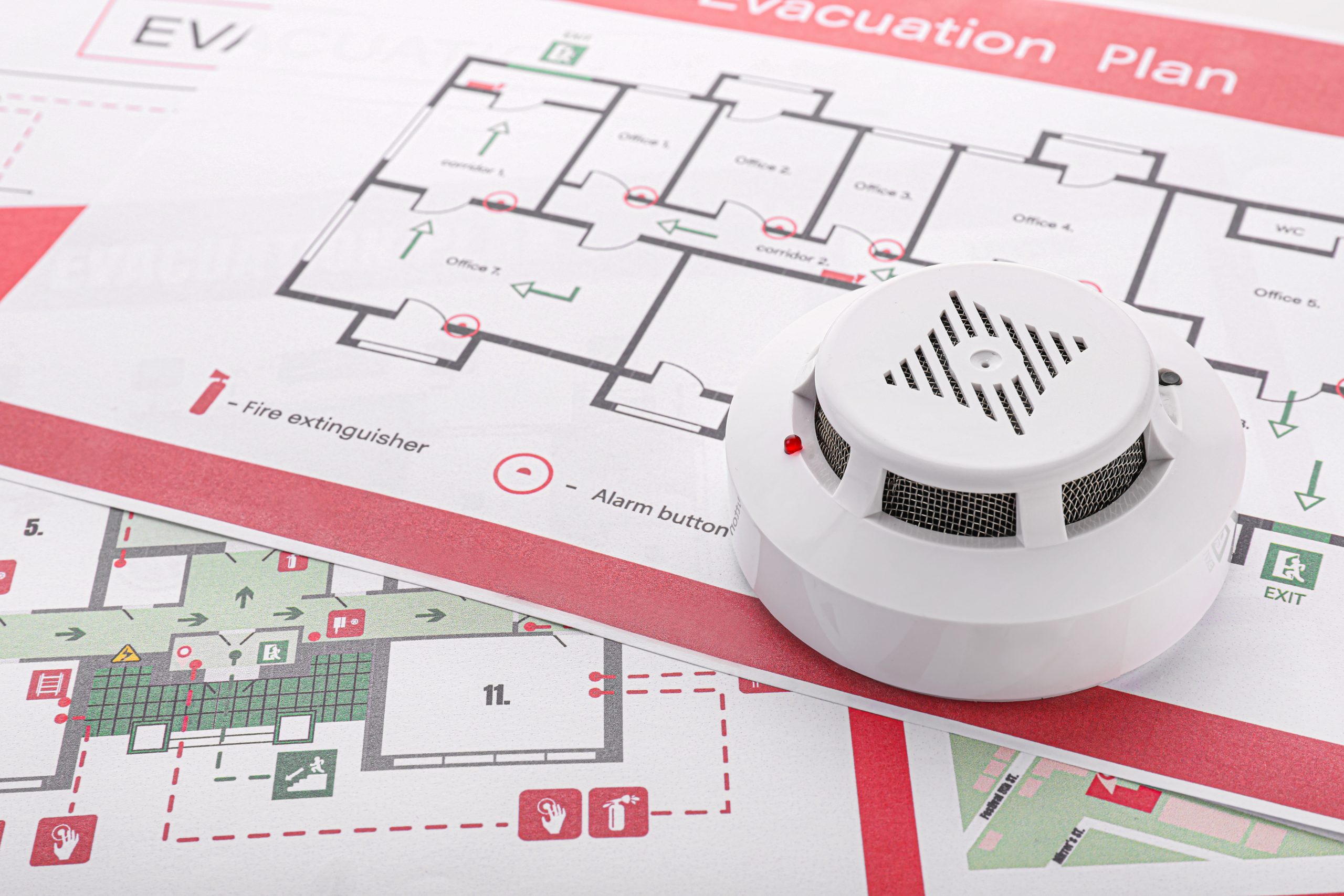
Fire detection and alarm systems. Inspectors verify that detection systems are installed per approved drawings, that all devices are functional, and that the system has been tested and maintained with records to prove it. Panel-level faults and silenced alarms are immediate red flags. Facilities with outdated addressable panels — or worse, conventional panels where zoning doesn’t align with the hazard layout — routinely receive findings. If the detection system can’t tell you where a fire is, it isn’t doing its job and inspectors know it.
Suppression system readiness. Sprinkler, foam, and gaseous suppression systems must be functional, properly labeled, and maintained in accordance with recognized standards. Civil Defense inspectors will check that suppression systems match the hazard classification of the protected area. A deluge system protecting a flammable liquid loading area that has never been flow-tested is a finding waiting to happen. Maintenance records under NFPA 25 criteria or equivalent provide the documented proof of ongoing system health.
Egress and means of escape. Even in process facilities where continuous occupancy is limited, egress provisions matter. Inspectors look for clear exit paths, compliant emergency lighting, exit signage that is illuminated and readable, and doors that open freely in the direction of egress. Blocked emergency exits — even temporarily, even in areas considered low-traffic — generate findings. The corrective action is simple; the failure to find it in advance is not.
Hazardous material storage and handling controls. Facilities storing flammable liquids, compressed gases, or other regulated materials are inspected against containment, separation, and ventilation criteria. This is where NFPA 30, NFPA 58, and their SAES counterparts intersect with Civil Defense requirements most directly. Dike integrity, flammable liquid cabinet compliance, bonding and grounding for transfer operations, and explosion-proof electrical equipment in classified areas are all within scope. A facility that engineered its storage layout correctly at construction but has since modified the layout without updating its hazard classification is particularly exposed.
Documentation and certification currency. Certificates of conformity for fire-rated assemblies, approval documentation for suppression systems, contractor licenses for maintenance firms, and third-party inspection records are all subject to review. Expired or missing certificates — even for systems that are functionally sound — result in findings. The documentation isn’t bureaucratic overhead. It’s the evidence chain that proves the engineering work was done correctly and maintained over time.
Where Industrial Facilities Commonly Fail
Across industrial compliance engagements, a consistent set of failure patterns emerges. These are not random — they reflect predictable gaps between how facilities are designed, how they evolve, and how maintenance programs are managed over time.
Modification without re-assessment. Process facilities change. New equipment gets added, layouts shift, storage quantities increase. Every significant change has the potential to alter the facility’s hazard profile. When those changes happen without a formal fire protection re-assessment — and without updating the approved drawings that Civil Defense holds — the facility develops a growing gap between its physical state and its compliance record. Inspectors are trained to spot this.
Maintenance outsourced without oversight. Maintenance contracts for suppression and detection systems are common and appropriate. What’s less appropriate is treating the contract as a transfer of responsibility. Facilities that cannot produce maintenance records, cannot identify which technician performed the last inspection, or cannot confirm that the contractor holds a valid GDCD-recognized license are creating compliance exposure that no contract clause will protect them from during an inspection.
Training documentation gaps. Fire brigade capability, emergency response drills, and operator fire safety training are requirements, not suggestions. Facilities that conduct training informally — without attendance records, drill reports, or corrective action logs — find themselves unable to demonstrate compliance when it’s asked for. The training probably happened. The evidence that it happened is what’s missing.
Passive fire protection overlooked. Fireproofing on structural steel, fire-rated penetration seals, and damper compliance in HVAC systems are areas that tend to drift over time, particularly after maintenance access, cable pulls, or equipment upgrades. A penetration that was properly sealed at commissioning and later reopened for conduit work — and then not re-sealed to the original rating — is a life safety deficiency. Inspectors with industrial experience look for these.
Engineering Your Way to a Clean Inspection
The facilities that consistently pass Saudi Civil Defense inspections without findings are not lucky. They have structured compliance programs that treat inspection readiness as a continuous engineering function, not a reactive event triggered by a scheduled visit.
That means maintaining a live compliance register — a document that tracks every fire protection system, its last inspection date, its next required service, the responsible party, and the status of any open findings. It means performing internal pre-inspection audits against the same criteria Civil Defense uses, using checklists built from the actual regulatory requirements rather than generic templates. It means ensuring that facility modifications go through a formal management-of-change process that includes a fire protection impact assessment before work begins.
For facilities operating under both GDCD and SAES requirements, the compliance register needs to capture both frameworks. The overlap is significant, but the gaps between them matter — and those gaps are exactly where findings tend to accumulate.
Third-party engineering review plays a genuine role here. An independent fire protection engineer reviewing a facility against current GDCD and SAES criteria before an inspection brings a set of eyes that has no institutional bias about how things have always been done. Findings before the inspection are recoverable. Findings during the inspection carry regulatory consequences.
Bottom Line
Saudi Civil Defense compliance for industrial facilities is not a documentation exercise. It’s a continuous engineering discipline. The facilities that struggle with inspections typically have solid systems that were once properly designed and have since drifted — through modifications, deferred maintenance, and undocumented changes — away from their original compliance baseline.
The path back is methodical: audit against the real criteria, identify the gaps, close them with documented engineering work, and build a maintenance program that holds the line between inspections. That’s not a heroic effort. It’s a system — and systems can be built, measured, and improved.
Work With Ignis Sentinel Engineering
Need a fire risk assessment, a third-party plan review, or an NFPA/SAES
compliance check for your facility? Our engineers help Saudi and international
industrial operators design safer operations.