

HiltonC
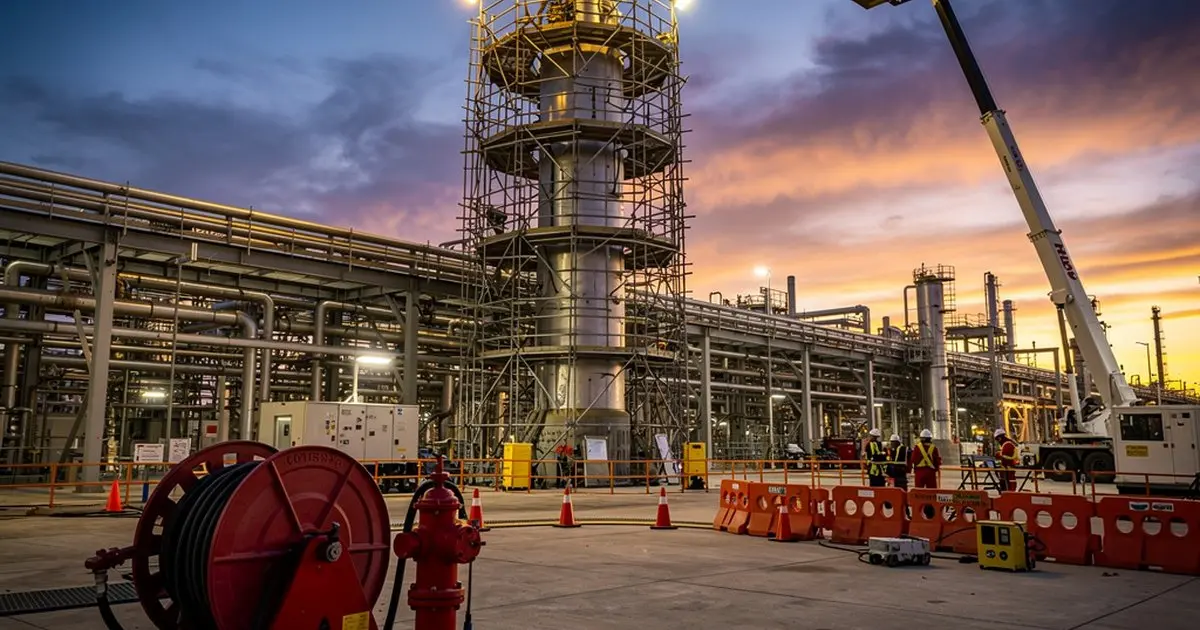
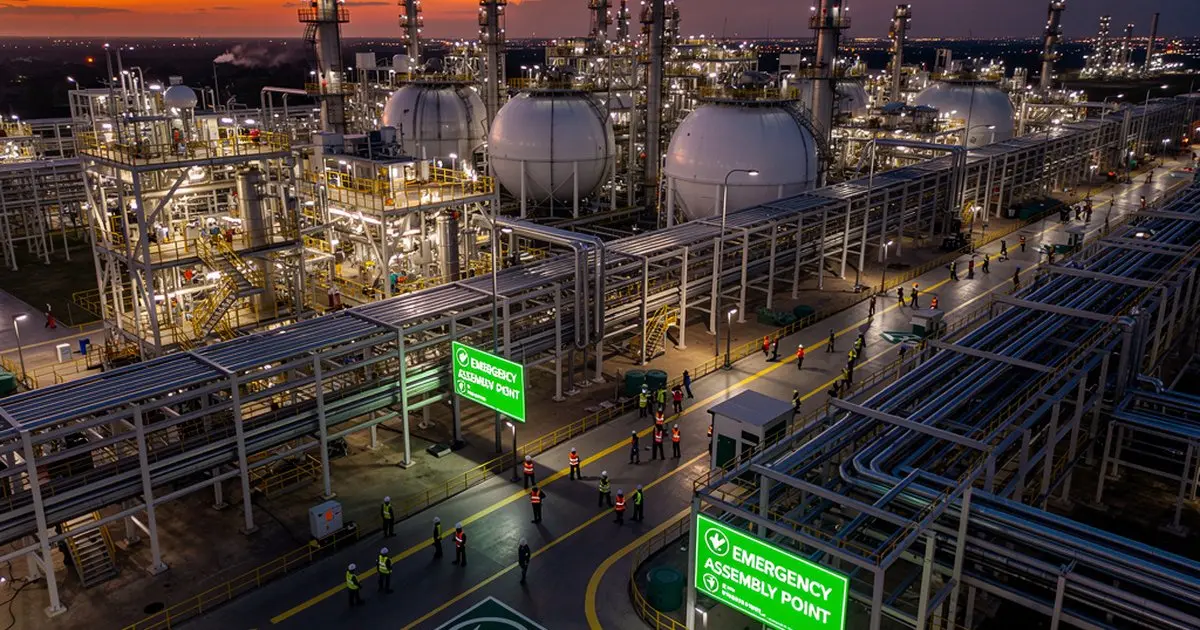
A plant turnaround is the most productive period in an industrial facility’s maintenance calendar. It is also the most dangerous. In the span of days or weeks, a facility that normally runs under tightly controlled conditions is opened, depressurized, cut into, welded, scaffolded, and reassembled — often by hundreds of contractors working in parallel. Hot work is ongoing. Hydrocarbons linger in vessels that were never fully purged. And the fire protection systems that safeguard normal operations are frequently taken out of service, partially or completely, to accommodate the very maintenance they were built to support.
The intersection of peak ignition risk and degraded fire protection is not a coincidence of turnarounds — it is their engineering reality. The facilities that navigate this window safely are the ones that treat fire protection during a turnaround as a discrete engineering discipline, not a scheduling footnote.
Why Turnarounds Create a Different Risk Profile
During normal operations, risk is relatively bounded. Process parameters are monitored, ignition sources are controlled, and fire protection systems are available at full design capacity. A turnaround breaks each of those assumptions simultaneously.
Hot work — cutting, welding, grinding, torch-applied activities — represents the single largest ignition source category during turnarounds. It is introduced across the facility at a density that would never be permitted during normal operations. At the same time, vessels and piping that have been drained and purged may still contain flammable residue at concentrations capable of ignition. Scaffolding, temporary structures, and combustible materials accumulate in and around process areas. Contractor workforce density multiplies, introducing personnel who may not know the facility’s normal emergency egress or muster logic.
Layered over all of this: fire water mains, sprinkler branches, deluge valves, and detection zones are routinely impaired during turnaround work — either because the systems themselves are being serviced, or because maintenance activities physically require temporary disconnection. Under normal operating conditions, a single impairment is managed through a formal protocol. During a turnaround, simultaneous impairments across multiple zones are the norm, not the exception.
This combination — elevated ignition potential, increased fuel availability, compressed workforce, and degraded suppression capability — defines a risk profile that requires active, engineered management rather than reactive coordination.
Hot Work Permit Engineering: More Than a Signature
Hot work permitting is widely understood in theory and routinely underengineered in practice. The permit-to-work system is only as strong as the engineering logic behind it — and during turnarounds, that logic must account for conditions that change rapidly and continuously.
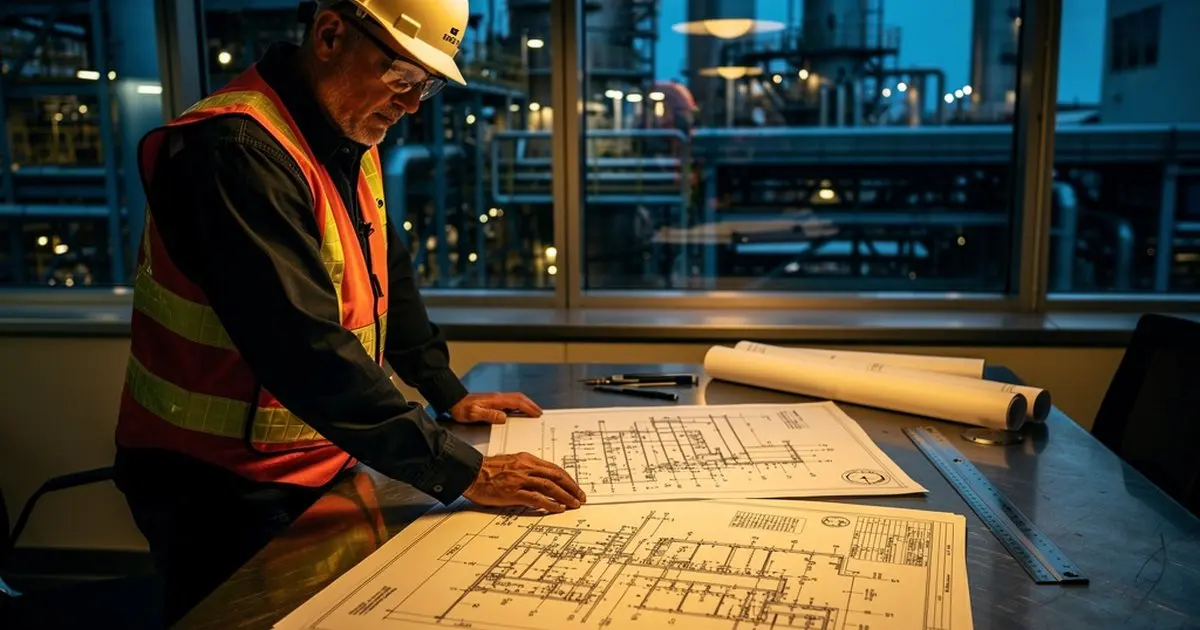
A credible hot work permit program during a turnaround incorporates several engineering-level controls. First, the permit boundary must be defined spatially — not just by work location but by the full radial hazard zone, taking into account adjacent structures, drain lines, open equipment, and overhead combustibles. Second, gas testing protocols must be both initial and continuous for work near vessels or piping that handled hydrocarbons, not a single pre-shift check. Third, the permit must explicitly identify which fire protection systems are available to respond within that zone and what compensatory measures are in place for any impaired systems.
This last point is frequently missed. Permits are issued without reference to the facility’s current impairment register. A welding crew begins work in a zone where the deluge system has been taken offline for valve maintenance two bays over — and no one has connected those two facts on paper. That gap is an engineering failure, not a paperwork failure.
In Saudi Aramco-aligned facilities, this integration between the hot work permit system and the fire protection impairment register is not optional — it is a requirement embedded in the Management of Change and work authorization framework. Operators who treat these as separate administrative processes consistently perform worse on audit findings and incident rates than those who engineer them as an integrated control system.
Temporary Fire Protection: Designing the Compensatory Layer
When fixed systems must be impaired, the engineering obligation shifts to compensatory measures. The question is not whether temporary protection is required — it is what form that protection must take, for how long, and who is responsible for verifying it is in place before work begins.
Temporary fire protection during turnarounds typically involves some combination of the following: portable fire extinguisher coverage increased and repositioned to reflect actual work locations; fire watches assigned to hot work areas with clear, timed responsibilities and defined communication protocols; temporary hose connections maintained at charged pressure from available mains where fixed branches are impaired; and in some cases, mobile water monitors or foam applicators staged for high-consequence areas.
The engineering rigor lies in the sizing and placement of these measures, not just their presence. A fire watch standing at the edge of a zone with a single dry chemical extinguisher is not a compensatory measure for a disabled deluge system protecting a hydrocarbon process vessel. The temporary protection must be scaled to the design fire scenario that the disabled system was engineered to address — even if the temporary form is fundamentally different in mechanism.
Facilities that define this scaling in their turnaround fire protection plan in advance perform far better than those that leave it to day-of judgment by maintenance supervisors. The plan should identify each impaired zone, the design scenario that zone addresses, and the specific compensatory configuration required — reviewed and signed off by a fire protection engineer before the turnaround begins, not after the first hot work permit is issued.
Phased System Restoration and the Recommissioning Risk
The end of a turnaround introduces a second high-risk period that receives far less engineering attention than the shutdown phase: system restoration. As sections of the facility return to service, fire protection systems must be re-energized, tested, and confirmed operational — in coordination with process startup, not after it.
The failure mode here is sequencing. Process systems come back online under schedule pressure. Fire protection restoration is assumed to be following in parallel — but no one has formally verified it. A unit restarts while its deluge system is still isolated because the valve internals are waiting on a parts delivery. The assumption of coverage and the reality of coverage are not the same thing, and the difference is invisible until it is not.
A phased restoration protocol addresses this by treating fire protection system readiness as a gate condition for process startup in each zone — not a parallel track. For each area or unit, the fire protection engineer confirms the following before process fluids are reintroduced: all impairments in that zone have been formally closed, system pressure tests have been completed and witnessed, detection coverage is verified functional, and any temporary compensatory measures have been formally demobilized. In SAES-aligned facilities, this confirmation feeds directly into the startup authorization package reviewed by operations and safety leadership.
This is not administrative overhead. It is the engineering discipline that prevents the turnaround from ending with a fire in a unit that everyone assumed was protected.
Documentation, Audit Trails, and Regulatory Exposure
From a business and regulatory standpoint, the documentation generated during a turnaround fire protection program serves a purpose beyond the turnaround itself. Saudi Civil Defense and Saudi Aramco compliance audits will examine whether a facility’s risk management during high-hazard periods can be demonstrated through records — not just stated through policy.
An auditable turnaround fire protection program produces, at minimum: a pre-turnaround fire protection review document signed by a responsible engineer; a full impairment log with dates opened, dates closed, and compensatory measures for each entry; hot work permit records cross-referenced to the impairment log; temporary system configuration records; and a post-turnaround restoration sign-off checklist by zone. These records demonstrate that fire risk during the turnaround was actively managed by competent engineering personnel, not passively assumed.
Facilities that cannot produce this documentation face a straightforward compliance exposure: an incident during a turnaround, in the absence of documented engineering controls, suggests to regulators that risk management was inadequate. The engineering records are the proof that it was not.
The Bottom Line
Plant turnarounds compress more ignition potential, more combustible exposure, and more fire protection impairment into a shorter period than any other phase of industrial operations. The facilities that manage this safely do so because they treat it as an engineering problem — not a scheduling problem with a fire warden attached.
The engineering disciplines that matter here are not complicated in principle: integrated impairment management, scaled compensatory protection, phased restoration gating, and documented audit trails. What they require is deliberate planning, competent review, and the organizational discipline to treat fire protection readiness as a startup condition rather than an assumption.
If your turnaround fire protection program consists of periodic safety meetings and a fire watch on hot work permits, it is not a program. It is a hope. The difference between the two shows up on the audit report — or in the incident investigation.
Work With Ignis Sentinel Engineering
Need a fire risk assessment, a third-party plan review, or an NFPA/SAES
compliance check for your facility? Our engineers help Saudi and international
industrial operators design safer operations.