

HiltonC
The wrong suppression agent on the wrong hazard doesn’t just fail to extinguish a fire — it can accelerate it. In refinery and petrochemical environments, where flammable liquids, pressurized gases, and high-energy process streams coexist in close proximity, suppression system selection is one of the highest-stakes engineering decisions a fire protection engineer makes. Get it right and you’ve built a system that earns its footprint. Get it wrong and you’ve spent capital on infrastructure that performs poorly under the exact conditions it was designed for.
This article walks through the engineering logic behind foam, water, and hybrid suppression selection — the hazard variables that drive the decision, how NFPA standards and SAES requirements frame those choices for Saudi industrial operators, and where the most common selection errors occur.
Why Suppression Agent Selection Is a Technical Decision, Not a Default
The fire protection industry has a tendency to default. Engineers default to water because it’s familiar. Operators default to foam because they’ve seen it at tank farms. Authorities Having Jurisdiction sometimes approve what was used on the last project without pushing harder on the current one. None of that constitutes engineering.
A suppression agent selection must be driven by hazard characterization — what is burning, at what rate, under what confinement conditions, and with what consequences if suppression fails or is delayed. Three variables matter most:
- Fuel type: Hydrocarbon liquids, polar solvents, and pressurized flammable gases each respond differently to suppression agents. An agent optimized for hydrocarbon pool fires may be completely ineffective — or counterproductive — on a polar solvent fire.
- Fire geometry: Pool fires in open diked areas, three-dimensional spray fires from pressurized leaks, jet fires from ruptured flanges, and deep-seated flammable liquid fires inside tanks each demand different suppression strategies. Geometry determines application method as much as agent type.
- Operating environment: Exposure temperatures, wind conditions, drainage slope, proximity to ignition sources, and whether the hazard is an unignited spill or an active fire all affect which agents perform reliably in the field.
NFPA standards — particularly NFPA 11 (foam), NFPA 15 (water spray), and NFPA 16 (foam-water systems) — provide the technical framework for these decisions. Saudi Aramco’s SAES standards layer project-specific requirements on top, and Saudi Civil Defense regulations impose minimum installation and documentation obligations that must be addressed in the design package.
Water-Based Suppression: Where It Excels and Where It Fails
Water remains the backbone of industrial fire protection — but its limitations in hydrocarbon environments are real and frequently underestimated.
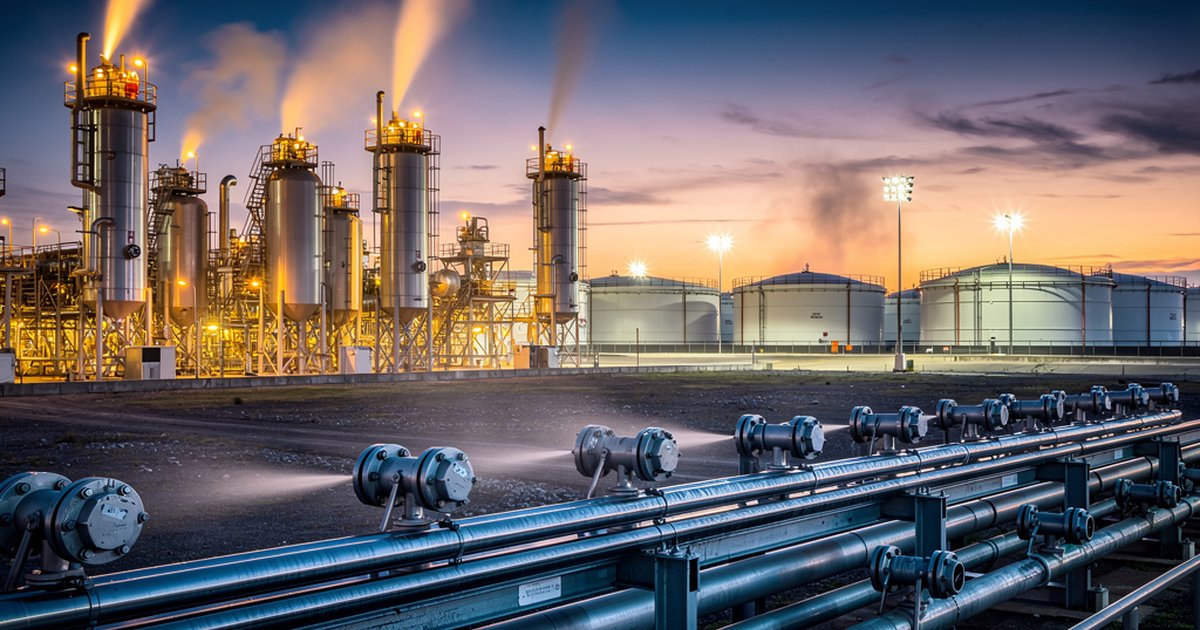
Water suppression systems — fixed spray, deluge, or cooling monitors — perform exceptionally well in two roles at refineries and petrochemical plants. First, exposure protection: cooling adjacent equipment, vessels, structural steel, and process piping during a fire to prevent escalation. Water spray at the application densities specified in NFPA 15 is highly effective at absorbing radiant heat and preventing structural failure during extended fire events. Second, vapor dispersion: water spray can dilute and disperse flammable vapor clouds before ignition occurs, though this application requires careful engineering to avoid creating a spray pattern that concentrates rather than disperses vapor.
Where water fails is direct suppression of hydrocarbon pool fires. Water applied to a burning hydrocarbon pool doesn’t extinguish — it sinks below the lighter fuel, flash-vaporizes, and can cause violent boilover or slopover, projecting burning fuel far beyond the original fire boundary. This is not a marginal effect. It is a well-documented failure mode that has contributed to fire escalation in industrial incidents. Any design that relies on water spray as the primary suppression agent for open hydrocarbon pool fires should be scrutinized carefully.
In SAES-aligned designs, water deluge systems are routinely specified for transformer protection, pump seal cooling, structural steel protection in process areas, and LPG sphere exposure protection — roles where water’s thermal absorption capacity is the relevant property, not its suppression chemistry.
Foam Suppression: NFPA 11 Principles and SAES Application
Foam suppression works through a combination of mechanisms: smothering the fuel surface with a stable, vapor-suppressing blanket; cooling the fuel and vapor interface; and separating the burning liquid from the oxygen supply. For hydrocarbon pool fires — particularly in open tanks, diked areas, and process sumps — aqueous film-forming foam (AFFF) and film-forming fluoroprotein (FFFP) foams have historically been the standard of care.
NFPA 11 defines the application rates, discharge times, foam concentrate percentages, and equipment requirements for fixed and semifixed foam systems. The standard distinguishes between Type I application (subsurface or gentle surface application to minimize fuel disturbance) and Type II application (higher-energy application through foam makers or monitors), and specifies minimum application rates based on tank type and fuel category. Fixed-roof tanks, floating-roof tanks, and open-top tanks each have distinct requirements because the fire geometry and vapor exposure differ significantly.
Several critical selection points apply in Saudi industrial environments:
- Polar solvent fuels: Standard AFFF formulations break down rapidly on polar solvents such as methanol, ethanol, and ketones. Alcohol-resistant AFFF (AR-AFFF) is required for these fuels, and it must be confirmed against the specific fuel at the actual operating concentration — not assumed from a general foam specification.
- Foam concentrate storage and proportioning: Saudi environmental conditions — sustained high ambient temperatures and humidity cycling — accelerate foam concentrate degradation. SAES requirements and NFPA 11 both call for periodic quality testing of stored concentrate. This is frequently skipped during ITM cycles and represents a serious latent failure mode.
- Environmental and regulatory considerations: Fluorinated foam concentrates are subject to increasing international regulatory pressure related to PFAS compounds. Operators specifying new systems should verify current Saudi Civil Defense and Aramco project requirements, as the regulatory landscape for foam formulations is actively evolving.
Hybrid Systems: When One Agent Isn’t Enough
Hybrid suppression — combining foam and water spray in an integrated system design — is the correct answer for a large class of refinery and petrochemical hazards, particularly those where multiple simultaneous fire scenarios must be addressed with a single infrastructure investment.
NFPA 16 provides the framework for foam-water sprinkler and foam-water spray systems, which discharge a foam-water solution through standard sprinkler or open-head spray nozzles. These systems are effective in aircraft hangars, loading racks, pump pads, and process areas where three-dimensional fuel spray fires and pool fires may both occur. The foam component handles pool fire suppression and vapor blanket formation; the water carrier handles cooling, wetting, and penetration.
The engineering challenge with hybrid systems is proportioning. A foam-water system must deliver the correct foam solution concentration — typically 1%, 3%, or 6% by volume depending on the concentrate and application — consistently across the entire protected area, at variable flow rates, and over the required discharge duration. Proportioning system selection (in-line balanced pressure, around-the-pump, bladder tank, or variable-flow electronic) directly affects system reliability and maintenance burden. This is not a component choice to delegate to a contractor — it belongs in the engineer’s design package with hydraulic calculations backing every proportioner selection.
For Saudi industrial projects, SAES standards often specify minimum discharge durations, foam concentrate reserve volumes, and redundancy requirements for proportioning equipment that exceed NFPA 16 minimums. Those project-specific requirements must be incorporated from the schematic design phase, not retrofitted during detailed design.
Making the Selection: A Decision Framework
A defensible suppression system selection follows a structured sequence, not a preference. The following framework reflects sound engineering practice for refinery and petrochemical facilities:
- Characterize the hazard fully: Identify every fuel type present, its flash point, its fire point, and its behavior under suppression. For mixed-fuel environments, design for the worst-case fuel, not the most common one.
- Define all credible fire scenarios: Pool fire, spray fire, jet fire, three-dimensional fire, tank overflow — each scenario may point to a different agent or application method. Document all scenarios before selecting an agent.
- Apply NFPA standard requirements first: NFPA 11, 15, and 16 provide minimum engineering requirements. Use them as the baseline, not the ceiling.
- Layer SAES and Saudi Civil Defense requirements: Identify which SAES standards apply to the asset class and confirm all project-specific requirements with the Aramco project team or the relevant authority early — before design is committed to paper.
- Evaluate agent compatibility and infrastructure constraints: Foam concentrate supply chain, storage temperature limits, proportioning equipment maintenance, and environmental compliance requirements all affect long-term system reliability.
- Document the selection rationale: The suppression system selection — with its supporting hazard analysis, standard references, and engineering assumptions — must be formally documented in the design basis. Inspectors and future engineers need to understand why the system was designed as it was, not just what it contains.
Bottom Line
Foam, water, and hybrid suppression systems are not interchangeable. Each has a defined technical role, and each performs within a specific hazard envelope. The refinery or petrochemical facility that defaults to one agent without engineering rigor is relying on luck — and in a process fire environment, luck is not a specification.
The engineering decision starts with the fuel, works through the fire scenarios, applies the applicable NFPA and SAES requirements, and ends with a documented, defensible design basis. That sequence isn’t optional. It’s what separates a fire protection system that works from one that is simply installed.
Work With Ignis Sentinel Engineering
Need a fire risk assessment, a third-party plan review, or an NFPA/SAES
compliance check for your facility? Our engineers help Saudi and international
industrial operators design safer operations.