

HiltonC
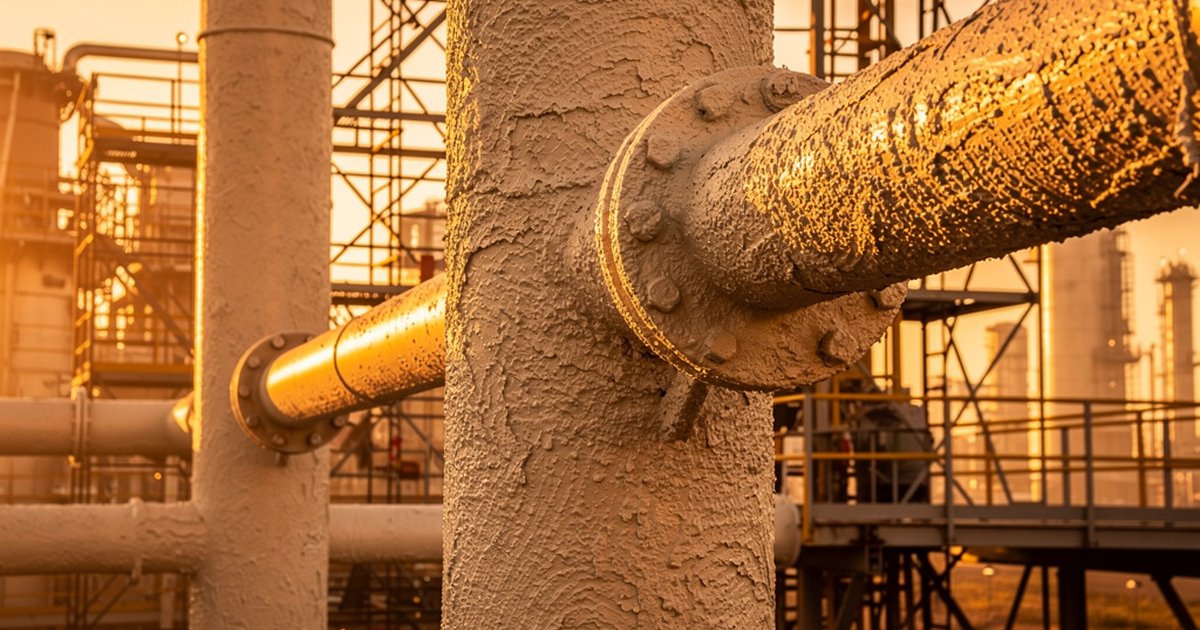
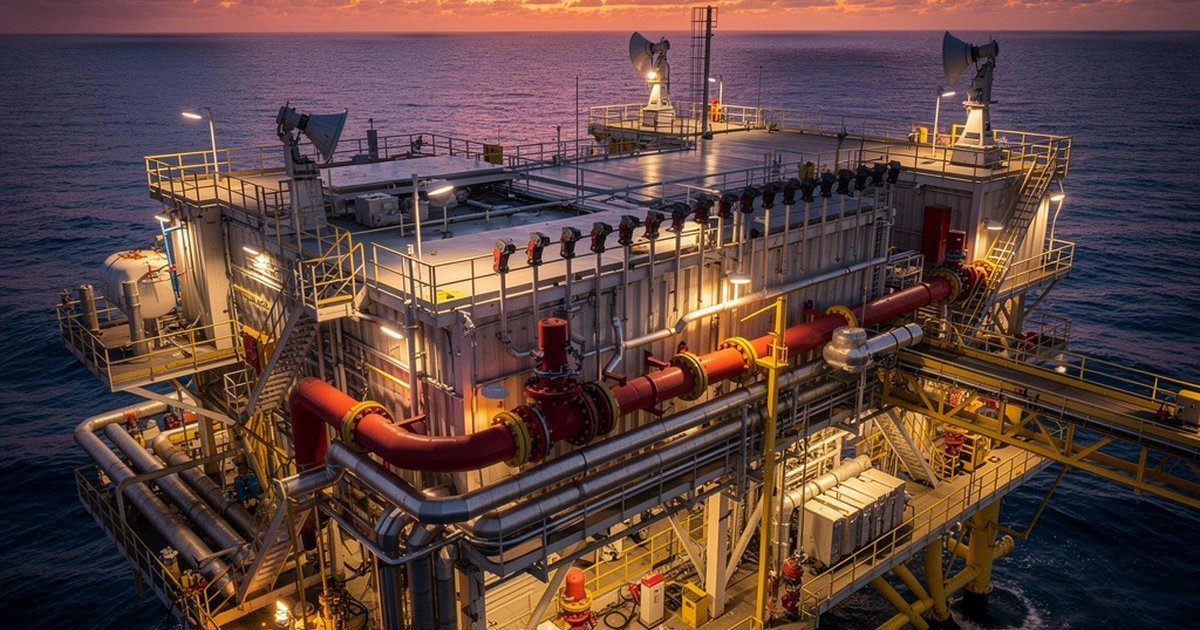
Every industrial fire protection strategy divides into two halves. The active half — sprinklers, deluge systems, foam monitors, firewater rings — gets most of the attention. Engineers specify it, operators test it, inspectors scrutinize it. The passive half — the fireproofing applied to structural steel, the firestop seals packed around cable penetrations, the fire-rated assemblies separating process areas — is often treated as a construction detail rather than an engineered system. That assumption is expensive, and in catastrophic scenarios, it is fatal.
Passive fire protection (PFP) does not put fires out. It buys time: time for personnel to evacuate, for emergency response to engage, and for active systems to operate before structural collapse removes every option. In a hydrocarbon fire scenario, that time window is measured in minutes. How many minutes your structure survives depends entirely on whether the PFP was engineered correctly — not simply specified, not simply applied, but engineered from hazard analysis through material selection to installation verification.
What Passive Fire Protection Actually Does — and Why the Engineering Matters
Structural steel loses load-bearing capacity rapidly under fire exposure. Unprotected steel can reach critical failure temperatures in as little as 15 to 20 minutes in a severe hydrocarbon fire — well before suppression systems have controlled the fuel source or emergency responders have established a perimeter. The engineering objective of PFP is to delay that failure threshold long enough for the facility’s emergency response sequence to run its course.
That delay is quantified as a fire-resistance rating — typically expressed in hours — and it is not a fixed property of a coating product. It is a function of the substrate geometry, the coating type and thickness, the design fire scenario, and the structural load at the point of protection. A beam supporting a critical process vessel in a pool-fire scenario requires a different engineering solution than a column in a lower-hazard warehouse — and treating them the same way is a compliance gap waiting to be discovered during an audit, or worse, during an actual event.
The governing frameworks for this engineering work include NFPA 221 for fire walls and fire barrier assemblies, applicable sections of NFPA 5000 for structural fire resistance, and — for facilities operating under Saudi Aramco’s engineering standards — the relevant SAES requirements that govern fireproofing of structures and equipment supports in hydrocarbon service. Saudi Civil Defense also imposes structural fire resistance criteria tied to occupancy and hazard classification, creating a layered compliance environment that PFP engineers must navigate simultaneously.
Material Categories: Choosing the Right Fireproofing System for the Hazard
Not all fireproofing materials perform the same way under the same fire conditions. The selection decision is a technical one, and it starts with defining the design fire scenario — pool fire, jet fire, or a combination — because the thermal flux and flame geometry differ significantly between them, and materials rated for one may not be adequate for the other.
The three primary material categories in industrial PFP are:
- Cementitious fireproofing: Dense or lightweight cementitious coatings applied by spray or trowel. These are workhorses for large-scale structural steel protection in outdoor process environments. They are cost-effective, durable under normal weathering, and capable of achieving multi-hour fire resistance ratings when applied at specified thicknesses. Their limitation is porosity — in saturated or corrosive environments, moisture ingress can compromise adhesion and reduce long-term performance if maintenance programs are not rigorous.
- Intumescent coatings: Thin-film systems that expand dramatically when exposed to heat, forming a char layer that insulates the substrate. Intumescent coatings are widely used where aesthetic or access constraints make thick cementitious application impractical. For cellulosic fire exposures they are well proven; for hydrocarbon fire scenarios, only products specifically rated for hydrocarbon exposure — so-called “reactive” or “EP intumescents” — are appropriate, and substitution of a standard cellulosic-rated product in a hydrocarbon environment is a material specification error with serious consequences.
- Mineral fiber and board systems: Used primarily for equipment, vessels, and structural members where mechanical protection and thermal resistance are both required. These systems are commonly applied to pressure vessels, structural supports adjacent to elevated-temperature equipment, and in areas where spray-applied coatings would interfere with maintenance access.
Material selection must be documented in a PFP schedule — a project deliverable that identifies every protected element, the specified material, the required thickness, and the fire-resistance rating achieved. This document becomes the inspection and maintenance baseline for the life of the facility. Facilities that lack a current, as-built PFP schedule cannot confirm what protection their structure actually has — a gap that third-party auditors and insurers increasingly flag.
Installation, Inspection, and the Quality Assurance Problem
Fireproofing is only as effective as its installation. The engineering specification can be precise; the material can be correctly selected; and the protection can still fail to perform if application thickness is inconsistent, surface preparation was inadequate, or curing conditions were not controlled. These are not theoretical risks — they are the most common finding in PFP quality audits on active construction sites and in operational facilities undergoing their first systematic PFP assessment.
The critical quality control checkpoints during installation include:
- Surface preparation verification: Fireproofing applied over mill scale, rust, or incompatible primer will delaminate under thermal cycling long before a fire event occurs. Surface cleanliness standards must be specified and inspected — not assumed.
- Thickness measurement and mapping: Applied thickness must be verified at multiple points per element using calibrated test pins or non-destructive thickness gauges, depending on the material. Spot-checking one location on a beam does not constitute thickness verification.
- Continuity and detailing at connections: Beam-to-column connections, gusset plates, and haunch details concentrate heat and are structurally critical. These junctions require explicit detailing in the PFP drawings — not generic coverage instructions — and they are the locations most commonly found with inadequate protection during audits.
- Curing and environmental conditions: Cementitious products in particular require controlled temperature and humidity during cure. Application in direct sunlight without shade, or during sandstorm events common to Saudi operating environments, introduces cure quality risks that are difficult to detect after the fact.
For operational facilities, the inspection standard shifts to periodic condition assessment. NFPA 25 addresses ITM requirements for active systems; there is no equivalent NFPA standard specifically dedicated to passive fire protection inspection frequencies for industrial structures, which means the inspection program must be defined in the facility’s own maintenance procedures, guided by the PFP schedule and the original engineering design basis. Saudi Aramco’s engineering standards provide additional mandatory inspection direction for facilities within its scope — requirements that operators should not treat as optional even when Civil Defense is the primary regulatory authority on a given project.
Integration with Active Systems and the Facility Safety Case
Passive and active fire protection are not independent strategies — they are complementary elements of the same risk control architecture. The design fire scenario used to size the active suppression system should be the same scenario used to determine the PFP rating requirements for the structural elements it protects. When these two engineering exercises are performed separately, by different teams, using different assumptions, the result is a gap: the active system may be sized for a scenario that the passive system cannot survive long enough to support.
This integration problem surfaces most visibly during hazard and operability (HAZOP) reviews and facility safety case submissions, where reviewers increasingly ask for documented alignment between suppression design basis and structural fire resistance assumptions. Facilities that can demonstrate this alignment — where the PFP schedule, the firewater demand calculations, and the emergency response timeline all reference the same design fire scenario — are demonstrably more defensible from a regulatory and insurance standpoint.
For Saudi operators, the Saudi Civil Defense review process and Saudi Aramco’s internal authority-having-jurisdiction (AHJ) process both scrutinize this alignment. A structural fireproofing specification that was not derived from an engineering analysis of the design fire scenario is not compliant — it is a guess that may or may not happen to be adequate.
The Bottom Line
Passive fire protection is not a commodity coating decision. It is a structural engineering discipline with direct consequences for how long a facility remains standing — and how many people can get out — during the worst-case event the safety case was designed around. Material selection, installation quality, connection detailing, and integration with the active system design basis all require engineering oversight, not just specification review. Facilities that treat PFP as a construction checkbox rather than an engineered deliverable will discover the gap eventually — in an audit, in an insurance survey, or in the incident investigation that follows a fire. The time to close it is before any of those events occur.
Work With Ignis Sentinel Engineering
Need a fire risk assessment, a third-party plan review, or an NFPA/SAES
compliance check for your facility? Our engineers help Saudi and international
industrial operators design safer operations.