

HiltonC
Suppression systems get the engineering attention. Detection systems get the budget cuts. That is one of the most persistent and dangerous misjudgments in industrial fire protection — because suppression cannot save a facility that detection failed to alert in time.
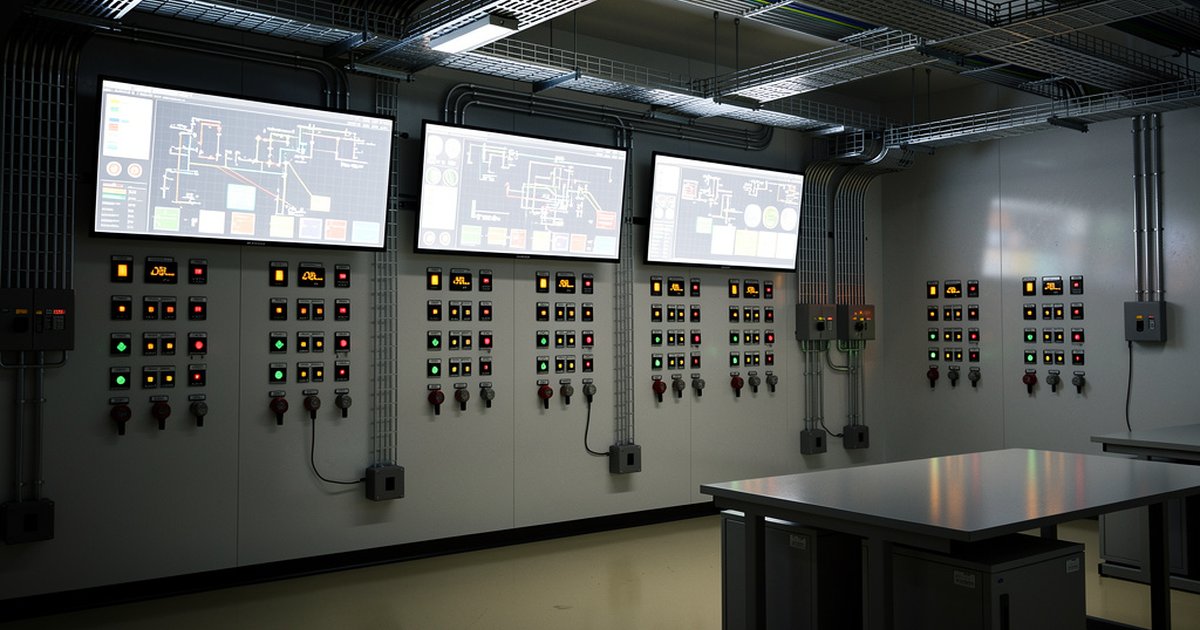
A fire alarm and gas detection system is not a commodity installation. In a hydrocarbon process environment, it is a layered, zoned, integrated early-warning infrastructure that must make the right call — the right output signal, to the right system, in the right sequence — within seconds of an initiating event. Getting that architecture wrong does not produce a nuisance alarm. It produces an uncontrolled fire in a compressor building, a delayed deluge activation over a pump skid, or an ESD system that never received the signal to isolate.
This article covers how fire alarm and combustible/toxic gas detection systems should be engineered for industrial facilities — with particular attention to NFPA 72, relevant SAES requirements, detector technology selection, system zoning, integration with suppression and ESD, and the compliance expectations of Saudi Civil Defense.
Why Industrial Detection Is a Different Engineering Problem
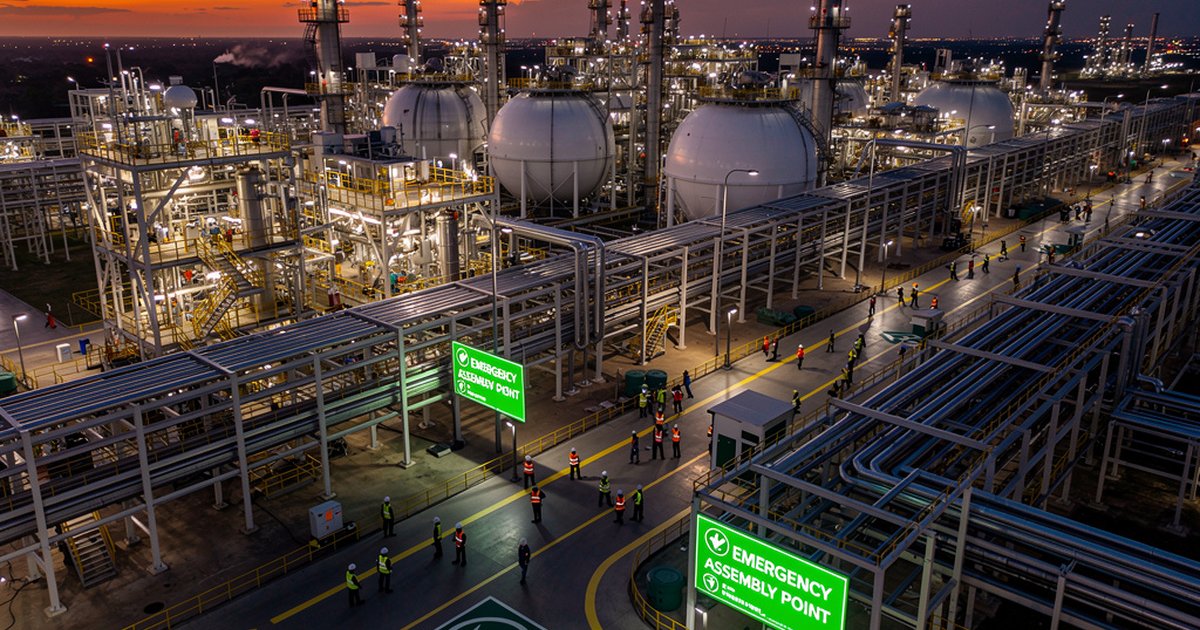
Detection engineering for a commercial building is largely a coverage geometry problem: place the right number of listed detectors at the right spacing, per NFPA 72 Chapter 17, and the system works. Industrial process environments are fundamentally different, for several reasons.
First, the environment itself is hostile. Outdoor process units, tank farms, and pipe racks expose detectors to direct solar loading, wind dilution, hydrocarbon contamination, humidity extremes, and vibration — all of which degrade or compromise conventional detector technologies. A standard ionization smoke detector has no business in an outdoor compressor area.
Second, the fire signature is different. Hydrocarbon fires in open process environments often begin with a flammable gas release — not smoke. The initiating event is a combustible gas accumulation, not a smoldering fire. Detection must be designed to catch the precursor, not just the fire itself.
Third, detection outputs carry real operational weight. In industrial facilities, fire alarm signals are not just audible/visual alerts — they trigger deluge releases, initiate ESD sequences, close isolation valves, shut down rotating equipment, and activate emergency ventilation. A false positive has operational cost. A missed detection has catastrophic cost. The system must be reliable in both directions.
Detector Technology Selection: Matching the Tool to the Hazard
The most common detection engineering error in industrial facilities is selecting detector technology based on availability or price rather than hazard signature. NFPA 72 provides a technology framework, but it does not prescribe which technology is appropriate for which industrial hazard — that is an engineering judgment that must be made at the facility level.
The following technology categories each serve specific applications:
- Point-type heat detectors — fixed-temperature and rate-of-rise types. Appropriate for enclosed machinery rooms and pump houses where ambient contamination prevents smoke detection. Simple, robust, and low-maintenance. Not appropriate as a primary detection technology in open process areas.
- Linear heat detection (LHD) — heat-sensitive cable deployed along cable trays, conveyor systems, or structural members. Effective where point devices cannot provide adequate coverage geometry. Commonly specified for pipe racks and cable galleries.
- Flame detectors — UV/IR and multi-spectrum IR types. The preferred primary detection technology for open outdoor process areas, turbine enclosures, compressor buildings, and loading bays where hydrocarbon pool or jet fires are the design scenario. Response time is seconds rather than minutes. Field of view, cone angle, and sensitivity to solar interference must be modeled for each installation.
- Aspirating smoke detection (ASD) — active air-sampling systems providing very early warning for enclosed electrical and instrumentation rooms. High sensitivity is appropriate in low-ambient-contamination environments. Not suitable for general process areas.
- Open-path infrared gas detection — beam-type detectors measuring hydrocarbon concentration across a defined path. Effective for large open areas — turbine halls, loading racks, tank farms — where point gas detectors cannot achieve adequate spatial coverage. Requires careful alignment and maintenance discipline.
- Point-type combustible gas detectors — catalytic bead or infrared sensors measuring local gas concentration in percent lower explosive limit (%LEL). The baseline technology for enclosed process areas and compressor rooms. Placement engineering — height, offset from release sources, coverage spacing — is critical and must account for gas density relative to air.
- Toxic gas detectors — electrochemical or infrared sensors for H₂S, CO, SO₂, and similar hazards. Required wherever toxic release scenarios are part of the facility hazard profile. Placement driven by toxicological exposure limits and likely release point locations.
System Zoning, Cause-and-Effect, and Integration Architecture
Selecting the right detector technology is necessary but not sufficient. The engineering work that determines whether a detection system actually performs is the cause-and-effect (C&E) matrix — the document that defines exactly what each detector signal (or combination of signals) does to every other system in the facility.
Industrial fire and gas (F&G) systems are typically designed around a voting logic framework. A single detector signal from one point-type gas detector in a process area may trigger only a local alarm — because single-detector activation in a harsh industrial environment carries a meaningful false-alarm probability. Two-out-of-two or two-out-of-three voting architectures, where multiple detectors must confirm an initiating condition before suppression activates, are common in high-consequence areas. The right voting logic is a function of the hazard severity, the false-alarm cost, and the detection technology reliability in that specific environment.
Integration with suppression systems must be explicit and tested. Deluge valve stations, gaseous suppression release panels, and foam proportioning systems all have their own control logic — and the interface between the F&G system and those systems must be engineered at the signal level, not assumed. NFPA 72 governs the fire alarm control unit (FACU) side of that interface; NFPA 15, NFPA 11, and NFPA 2001 govern the suppression side. The integration itself falls between those standards and must be explicitly addressed in the system design documentation.
Integration with emergency shutdown (ESD) systems follows the same principle. ESD systems — typically governed by IEC 61511 functional safety requirements — operate on safety instrumented system (SIS) logic. The F&G system is typically a separate, dedicated layer; in some architectures it initiates ESD signals directly, in others it operates through permissive logic in the distributed control system (DCS). The interface design must be defined, documented, and validated before commissioning.
NFPA 72, SAES Requirements, and Saudi Civil Defense Expectations
NFPA 72, National Fire Alarm and Signaling Code, is the primary applicable standard for fire alarm system design across most industrial contexts in Saudi Arabia. It governs FACU requirements, initiating device installation, notification appliance coverage, emergency communications, and system documentation and testing requirements.
Saudi Aramco Engineering Standards (SAES) add an additional compliance layer for facilities within the Aramco asset boundary. Relevant SAES documents address fire and gas detector placement criteria, control system integration requirements, and the specific testing and documentation expectations for F&G systems on process facilities. Where SAES requirements are more stringent than NFPA 72 on a specific point, SAES governs for Aramco projects — and the gap between the two frameworks must be identified early in the design phase, not during final review.
Saudi Civil Defense (SCD) enforces its own inspection regime for fire alarm systems in facilities requiring SCD approval. Inspectors will verify detector coverage, notification appliance placement and audibility levels, FACU configuration and annunciation, and system documentation. Facilities that submit designs engineered to NFPA 72 minimums without accounting for SCD field expectations — particularly around Arabic-language annunciation, local authority notification protocols, and documentation package format — frequently encounter approval delays. Engineering the compliance package with SCD expectations in mind from the start eliminates a predictable late-stage problem.
Documentation, Testing, and the Commissioning Standard
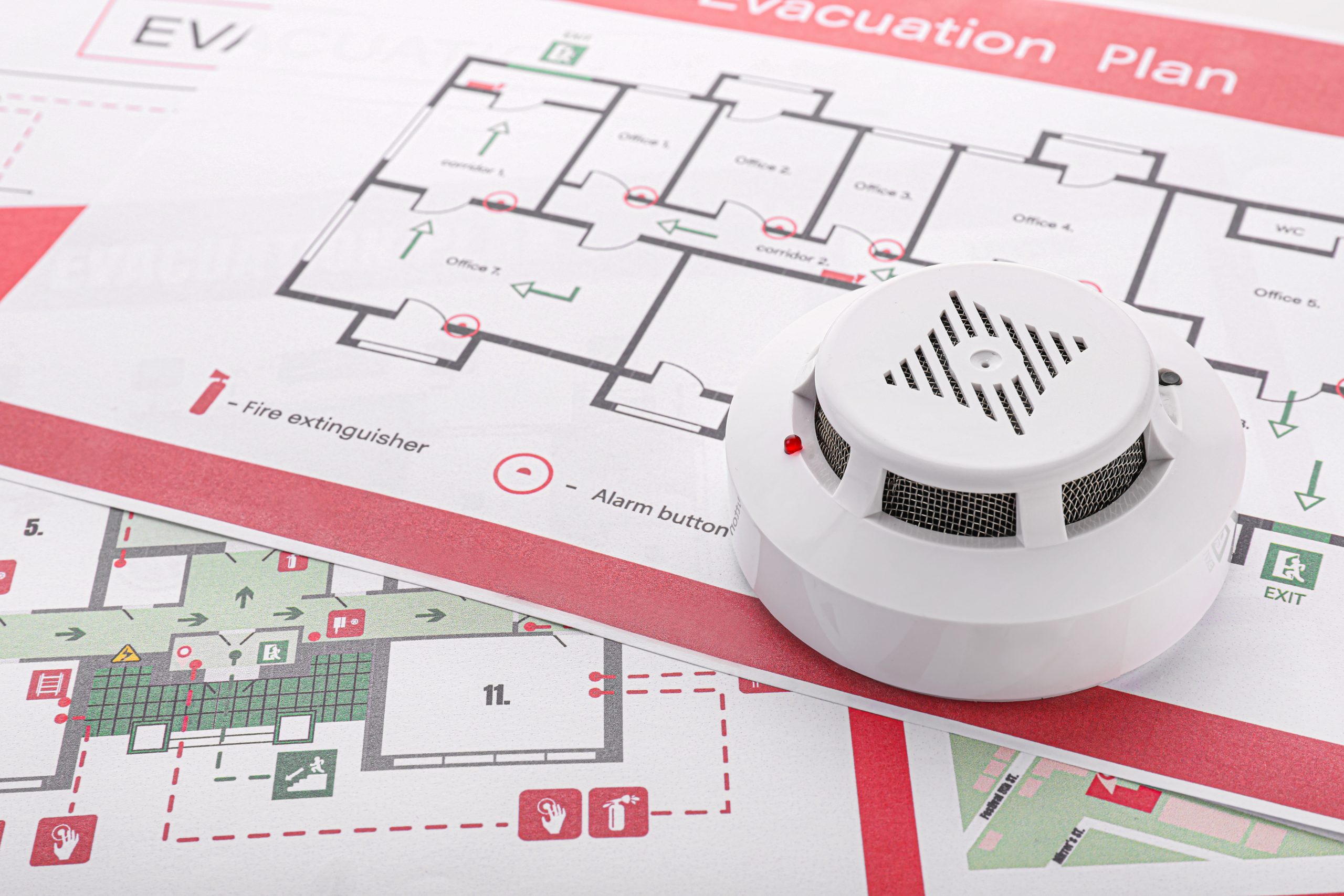
A well-designed fire and gas detection system that has not been properly commissioned does not exist — operationally speaking. NFPA 72 Chapter 14 establishes the acceptance testing protocol: every initiating device must be functionally tested, every notification appliance verified, every supervisory signal and trouble signal confirmed, and every integrated function — suppression release, ESD signal, door hold-open release, HVAC shutdown — tested end-to-end.
For industrial F&G systems specifically, the commissioning scope extends beyond the FACU boundary. Flame detector sensitivity and field of view must be verified against design coverage models. Gas detector response time and alarm setpoints must be confirmed under controlled conditions. Voting logic sequences must be walked through and documented. The cause-and-effect matrix — which the commissioning team uses as the test script — must match the as-built system configuration exactly.
Record documentation following commissioning must include as-built drawings, device schedule with final configuration parameters, completed test records for every device and function, and the signed acceptance certificate. This package is not optional — it is the facility’s proof of compliance, the baseline for future NFPA 25 inspection cycles, and the record against which future system modifications must be tracked.
The Bottom Line
Fire alarm and gas detection systems are the earliest layer of defense in an industrial fire scenario — and the layer most frequently under-engineered relative to its importance. Suppression systems protect assets. Detection systems protect the opportunity to use them.
Getting detection right means selecting technology against the actual hazard signature of each area, engineering the cause-and-effect logic rigorously, integrating with suppression and ESD at the signal level, and aligning with NFPA 72, applicable SAES requirements, and Saudi Civil Defense expectations from the first design iteration. Facilities that treat fire and gas detection as a checkbox procurement exercise discover the gap when it is too late to close it inexpensively.
Design it correctly the first time. Test it completely before first fire. Maintain the documentation as a living record — and the system will perform when the facility needs it most.
Work With Ignis Sentinel Engineering
Need a fire risk assessment, a third-party plan review, or an NFPA/SAES
compliance check for your facility? Our engineers help Saudi and international
industrial operators design safer operations.